I originally meant to do The Road alongside Thunderball, the James Bond movie I saw immediately after it, but I never got around to it. So I'm already bending the rules on this blog feature on my second offering, but I feel putting together two movies which have some similarity is another good way to do things. Rampage and The Road are quite different in their story and the level of appreciation I have for them, but both try to work with relatively simple plots.
The Road
Teaser: A father and son journey through a post-apocalyptic America, struggling to survive in a slowly dying world.
The bad news first: One of the few scenes which I thought didn't work involved the father and son seeing a couple of people getting chased by a group of cannibals in the near distance. In their efforts to get away, they end up having to worry more about several dead trees which choose that moment to topple over, nearly crushing them. I never saw The Happening, one of M. Night Shyamalan's largely panned offerings, but one of the major complaints involved characters fleeing from the wind. The danger of the completely decimated trees falling had already been shown, but when it's inserted as the primary fear over machete-wielding savages it comes off as kind of silly.
A little bit of a nitpick, I know, as is my next minor disappointment. There's something of a running theme in the book where the son is fretting over a little boy they encounter on the road whom the father refuses to take along to protect. It's a pretty important part in the book, and in the movie it's relegated to a single brief scene. The overall theme of the father's general distrust of the world around him and the son's penchant for charity is still apparent, but the scene where he sees the little boy is truncated enough that it seems out of place, perhaps even for viewers who haven't read the book.
The good stuff: Success isn't a done deal when you adapt a Pulitzer Prize winning novel to the screen, but there's a pretty good chance of it. The movie is pretty much a spot-on transfer from one medium to the other, hitting upon just about every emotion and image that Cormac McCarthy originally put to the page.
Stylistically, the film presents what may well be the most terrifying images of a post-apocalyptic world ever imagined. The wider shots of decaying cities have a distinct computer-generated residue on them, but the more intimate shots of abandoned malls and freeways are very well-done. A pall of smoke or stormy clouds hang over every scene, and the images are hammered home once one realizes that movie was mostly filmed at scenes of actual environmental disasters or amid urban blight. The most horrific descriptions in the book are omitted, probably in the interests of limiting the rating to R, but there's still plenty there to show that this isn't your happy-humans-binding kind of apocalypse.
The acting in the film is terrific. The film was shot on the cheap, and the characters are sparse enough that highly respected actors like Robert Redford and Charlize Theron are used for what are fairly minor roles. Most of the story rests of the shoulders of Viggo Mortenson and young actor Kodi Smit-McPhee, and both do a superb job. There are plenty of moments where the helplessness seems to overwhelm the two, and it's heartbreaking to watch. Yet it is balanced out, and more often than not exceeded, by the idea that the human spirit is a tough nut to crack.
Verdict: Best watched when you can have someone to comfort you, but definitely one to check out.
Rampage
Teaser: A sick-of-it-all youth goes on a massive killing spree.
The bad news first: The director of this movie, Uwe Boll, has been widely panned as a hack who can't make a film to save his life. The Nostalgia Critic says it better, of course, in the beginning of his (and Spoony and Linkara's) review of Alone in the Dark. In general, his movies exist more as a target of MST3K style snark, even if Boll himself may consider them to be great works of art. That said, I checked out Rampage because reviewers generally said how surprised they were to like it in spite of the Boll credit.
Perhaps the biggest disappointment in the movie is that there is virtually no reason to sympathize with the main character, shooter Bill Williamson. Rampage bears some similarity to Falling Down, which features a jaded ex-military contractor storming through Los Angeles and unconventionally airing his anger toward convenience store price gouging, construction delays, overpaid plastic surgeons, and a variety of other targets. He destroys a lot of property, but he limits the casualties to the self-defense killing of one neo-Nazi shopkeeper. The audience has plenty of sympathy for him, since he's taking on the multifarious annoyances in society without becoming a truly horrible person, so the line at the end where he's stunned to find out he's "the bad guy" has some resonance with the viewer as well.
By contrast, I can't really see any mentally sound person going ra-ra for Williamson. His friend posts a few YouTube rants about overpopulation and all of the problems it's causing, but Williamson himself doesn't seem to subscribe to this view. He's undoubtedly stressed to the breaking point over an unsatisfactory job and pressure from his parents to move out, but he seems just as motivated to kill dozens of people because the restaurants in the area have rude servers. So while I came away from Falling Down sympathizing to a certain degree with the semi-antagonist and still able to be amused by his rampage, I came away from Rampage thinking, "This guy is a monster" and "Cry me a river, Klebold."
I've never really subscribed to the idea that violence in movies, video games, and so on is a direct cause of massacres like the Columbine High School shooting. Still, the soundtrack and other parts of the movie seem to be playing up Williamson's actions rather than condemning them. Any person in their right mind would be repulsed by the rampage, but it's just a little disconcerting to watch a movie consisting mostly of mass murder and realize that it might well be a favorite in the DVD collection of the next deranged gunman to make the news.
The good stuff: Since Uwe Boll's reputation is failing everything related to movies forever, Rampage is at least properly assembled. Most of the actors do a good job, and the dialogue comes off naturally as well. In terms of eliciting a strong reaction, you can't get a much stronger reaction than the loathing Williamson elicits. The ending is also rather unexpected.
Verdict: It's odd that in his slow improvement, Boll has gone from making easily panned movies to more imperfect but not altogether atrocious movies. There are much more palatable films if you're looking for a straight action flick, however, and rather more humane dramas such as Elephant if you want something specifically related to a shooting spree.
As I've said before, I probably spend too much time in front of the TV (even if a good portion of my former list has wrapped up in one way or another). Then there's the time I spend playing video games, or surfing the Internet, or writing blog entries like this, or researching political scandals...it leaves a bit of endangered time for reading, cooking, chores, and so on.
In general, my work schedule is enough to keep me busy but leaves enough free time that I'm not burned out. Of course, I'm not far off from the glory days of college when between a few hours of classes, a couple hours of practicing for a sports team, and some more time for studying, the vast majority of the day was still mine. So this list is just a few things I would try to do if the Earth's rotation slowed enough to grant everyone a few more hours each day. It's all within my capability, though...otherwise I'd clearly advocate such things as "Win the lottery" and "End all problems on Earth."
5. Listen to and watch public broadcasting
A proclamation and...I don't know, some kind of sea anemone?
"Wait a minute, you idiot!" the few people who might actually be reading this are saying. "Weren't you just complaining about how you spend too much time in front of the TV and would try to do different things if you had more time?" Well, yes. So this falls more on the radio end. There are plenty of shows on public radio which I love, and I generally only catch snippets of them while I'm on the road during the afternoon. I'm still able to catch good portions of Wait Wait Don't Tell Me and Prairie Home Companion, but to some degree it's the experience of listening to them that I miss. Instead of streaming online, it's nice to hear it live with friends or family and an evening drink. Of course, many Saturdays I'm spending with friends, so that's nice too.
I also have the nagging thought that I should watch more highbrow public television instead of the still somewhat highbrow network and cable stuff. I always liked Nova, which airs on Tuesday when I'm enjoying a regularly scheduled hangout with friends. And then there's the Red Green Show and Monty Python, both of which sadly disappeared from MPBN but may have returned...including Red Green on Tuesday, again.
This is still a really low priority in general. I do get a healthy dosage of public broadcasting, and there's always Nova on Hulu if I really want to get serious about the TV aspect.
4. Cook
The Maine-Sweden War.
Every now and then I put my mind to cooking a meal and I whip up something really nice. It's about that time of year when I can finally make a decent batch of corn chowder, and I've been known to make a few chicken dishes, stir fry, baked ziti, and other things that actually take time and effort but give a bountiful reward in taste and leftovers.
These are generally the only things I make when I cook, though. I've gotten away from the frozen dinners I got as a stopgap in my later college days, but my dinners still involve a good deal of Hamburger (or Chicken) Helper and frozen pizza.
Part of this probably has something to do with the split days I usually work a couple of times per week. It might be a little hard to prepare and devour all those balsamic drippings when I need to leave to attend a selectmen's meeting.
3. Give to charity
"It's so many, asking so much. After awhile, you just tune them out."
I do manage to get some contributions out. I'll weather the once-every-several-months calls from my alma mater and send some cash their way once I get an extra biweekly paycheck. I give to food pantries once in awhile, or attend events that benefit charitable organizations. There are plenty of good causes, from the Red Cross on down to the the Girl Scouts. I just have to take another look at my finances and plan a few things out, I guess.
2. Athletic activity and adventurous outings
This looks like fun, right?
During high school and college, I usually had a couple of hours dedicated to either cross-country running, cross-country skiing, or track and field. It's more difficult to do that with a full-time job. Oh, and because some bum stole my bike in the middle of a snowstorm earlier this year. And because my cross-country ski activities were formerly subsidized by the schools, who were nice enough to provide the wax and other materials to keep the skis in tip-top shape.
I'm right smack in the middle of my recommended BMI, so I'm still doing OK. I get out semi-regularly for a run or decent hike. Ideally, I guess I'd be living a pleasant retired life at the foot of a mountain with great hiking trails and on a road with wide bike lanes, all within an easy distance of a renowned cross-country ski area. That will have to wait another few decades, though, since I didn't go into a grossly overpaid sport that allows me to possibly retire in my 20s.
1. Creative expression
Guess who?
While my job is about writing, and sometimes involves a good deal of creativity, it's often within a rigid set of guidelines to ensure accuracy and prevent bias. So while I can have a lot of free reign when doing articles on a skydiving experience or other odd things, the account of a local municipal meeting doesn't exactly count as creative writing. I haven't written a fictional piece in a good long time, and this blog basically allows a bit of an outlet on a lot of random topics. The political scandal blog is also fact-based, but I have a lot of fun writing it. That involves a ton of research, so I suppose more time and money and such would be nice to allow more in-depth research in archives, historic sites, etc.
The Summer Glau drawing above is something I did one night last year, and it was the first piece of artwork in years. It helped me to start sketching again, but in general I do it in bits and pieces when I get some spare time. Plus I always do them from photos, and I have a bunch of art supplies which have been untouched since a college art course. So it would be nice to get back into that side of things.
At any rate, the Bachelorette (a high school friend) endorsed one of my drawings before she was the Bachelorette, so that's cool.
Here begins yet another recurring segment, which should remain feasible as long as my "to see" list of movies includes dozens of titles, Netflix keeps getting my money, and rural Maine continues to be boring. I tend to chat with a college friend while watching movies online, and quite a few Friday nights have been spent that way. I guess I could go out and hit the scene, but you know...rural Maine. This segment is quite simple: a two for the price of one movie review where I'll give a quick reaction to some movies I've seen in quick succession, either back to back or within the span of a few days.
The inaugural duo: The Boondock Saints II: All Saints Day, 2009 sequel to cult hit The Boondock Saints, and Inception, the current mind-bending adventure from Christopher Nolan. We'll start with Saturday's entertainment.
The Boondock Saints II
Teaser: The movie came out a decade after the first Boondock Saints, but only eight years have passed when the story begins. The Saints and their father have moved to Ireland to pursue a quiet farming life, but return to Boston when they are framed for the murder of a priest. They pick up a Mexican fighter along the way, as some of our favorite finest from the Boston Police team up with an FBI agent to figure out how to respond to their return.
The bad news first: It takes a solid half-hour for the story to really start. The Boondock Saints ended with the brothers and their father vowing to exterminate crime syndicates in the city and the BPD giving them a little bit of help in their mission. It turns out they can't keep a promise. The final scene marked their final murder, at least until the action starts to pick up. So rather than keeping the Saints in Boston, where a frame-up may well have had more serious consequences, it has to grind its way along with everyone fretting about what will happen when they get to Boston. By comparison, at the half-hour mark of The Boondock Saints we've already gotten quite a bit of character development, a couple of dead Russian mobsters, and the Saints' realization of their cause.
Most of the surviving characters return, but the absence of Willem Dafoe's Paul Smecker is obviously the most noticeable one. Julie Benz plays a protege of his, ie the same character but better-looking in a dress. For some reason, Benz also puts on a Southern accent for the role. I'm sure there are men out there who immediately consider a Southern accent to immediately amplify a woman's sexiness, but it just doesn't seem to fit. Clifton Collins Jr. does a reasonable job with Conner, who the Saints take on as a third member, but the character doesn't seem all that necessary. The first movie made it kind of clear that Daddy Saint was taking the place of the slain Rocco, but due to the stuttering transit issues in the first quarter of the movie the Saints are left with a not-really-necessary vacancy to fill.
Troy Duffy, writer and director of the original movie, returns for the sequel. Unfortunately, he tries to transfer quite a few of the favorite elements from the first film. References to past parts of a series are perfectly OK when done in moderation, but the best sequels take the characters and give them a new situation, resulting in an entirely new story for the audience to love. Boondock Saints II ends up transferring way too many things over, to the point where characters are dredged up from the dead.
The good stuff: After that half-hour plod to get the Saints to Boston and they finally do what they do best, the movie suddenly feels a lot more like the original. A clumsy assassination attempt involving a forklift and a piddling little gun is immediately followed by a hilarious attempt by Detective Greenly (Bob Marley) to do a Smecker-esque forensic investigation with some wholly inadequate music on his iPod. I know I complained about the transfer of too many elements, but the return of the rope in one scene results in a scene which nicely shows the progress the boys are making in vigilantism since their lucky break in a luxurious hotel room.
It's nice to see the relationship between the authorities and the Saints explored a little more. The backstory of the Saints' father is done very well. And I rather enjoyed the ending, and not in a "thank God it's over" kind of way. It pretty much requires a third movie in the series, though. That could easily be a good thing, but it could turn out to be pretty awful as well.
Verdict: It was really flawed, but you can still enjoy it.
And on to Sunday.
Inception
Synopsis: A new technology allows a group of thieves to sneak into the subconscious of people who have been knocked out by roofies or other means in order to steal their ideas. When a client wants to use the technology for "inception" (the planting of an idea) to break up a rival empire, one thief is willing to do it in order to win a return to the United States to see his children. But the memories of his wife and other obstacles threaten not only this goal, but the safety of his fellow mind hackers.
The bad news first: The soundtrack at times competes with the dialogue. Much of the first half of the movie is discussion, and the score seems to be constant even in scenes where it would have been much better for it to quiet down and let the characters talk.
One dream seems just a tad cliche. No, the dreamer doesn't wake up in a high school hallway in his underwear, but the environment is just a little unoriginal. When I saw the trailers for this movie, I thought it gave an excellent sense of anything being possible in a dream through unconventional images like the train barreling down the city street and zero-gravity fights in a hotel hallway. When one trailer informed us that there would be scenes of battles at a remote fortress in the snow, it made me wonder if the dreamer had recently seen The World Is Not Enough or something.
The good: So very much. There's a reason this movie has earned a 9.2 out of 10 average vote out of some 84,000 votes on the Internet Movie Database, ranking it as number three on their list of the top 250 user-rated films.
The trailers have already revealed virtually every action scene in Inception, but they also promised that it would deliver a story with the visuals only serving to complement it. And it does. Christopher Nolan, fresh off the success of The Dark Knight, has written an excellent screenplay with a very original premise. The story is highly complex; the opening scenes immediately start whipping the audience around, revealing a few flashbacks and multi-layered dreams within the opening scene alone, and this structure continues until the end. Yet even when you're in the midst of a dream within a dream within a dream within a dream, you can still trace your way back to reality and know the motivations and reasons for what's going on.
I've seen some mixed reviews about Leonardo DiCaprio's performance, which I'm hoping isn't just continued residual resentment over the Titanic hype 12 years ago. DiCaprio's performance probably won't net him an Oscar nomination, but it kept you caring for the character and his overall situation. Joseph Gordon-Levitt and Ellen Page did quite well in their roles of trying to keep things tethered in some degree of sanity. Michael Caine seems to be quite a big name for a role which comprises some 20 minutes at best, but perhaps that just goes to show that they weren't going to water anything down when it came to the actors.
The visuals are very striking on the big screen and, as I've mentioned, they don't overwhelm you. In fact, I was focused so much on the story that when the train finally did come blasting down the street, it caught me completely by surprise. Even though it was one of the more iconic images in the trailer, I hadn't been waiting impatiently for it to show up.
And finally, there's the last scene. Not to give anything away, but it couldn't have been better.
On September 22, 2004, Oceanic Flight 815 ostensibly broke apart and crashed on a mysterious island in the South Pacific after an unsuccessful attempt to divert to Fiji. That was also when Lost premiered on ABC, following the adventures of the survivors of said Flight 815. The series concluded on May 23, following six seasons of smoke monsters, polar bears, abandoned scientific research outposts, exploding freighters, time travel, and quite a few back stories. I belatedly got into the series after the first season, fully caught up between the second and third seasons, and was a devotee for the remainder of the series.
"This plane apparently had the most beautiful people in the world on board..."
I browsed the various commentaries after the finale screen and it basically distilled to the idea that the writers and producers et. al. could end the series in one of two ways: wrapping up the various unanswered questions in a nice package or going out on a heartwarming note to let us know what became of all of the characters we've invested in for six years. Almost all of the characters were memorable, and I can think of only three truly hated by fans: Ana-Lucia Cortez, reviled for general cattiness (though well-drawn overall and just a tad sympathetic) and Nikki and Paulo, universally hated for their slipshod insertion into the series...so hated, in fact, that an entire episode was dedicated to their gruesome demise. The Lost team chose the latter option in ending the season. And while it's a little disappointing that so many of the unanswered questions are going to remain that way, the show was heavily character-based and it was nice to see them give a nice send-off to some of the fan favorites.
So here is my personal Top 10 list for Lost characters, posted a bit late as I've been slowly constructing it for awhile now. It has an impressive 40 percent survival rate!
10. Charlie Pace
Dominic Monaghan, hot off three successes in the more minor role of Merry in the three Lord of the Rings movies, provided one of the more recognizable faces in a cast of actors who generally hadn't carved out a major niche in the TV and film industry. His character, Charlie Pace, had something of a sine curve of popularity. He was likable, if a little narcissistic (letting as many people on the island as possible know that he was the bass player for a dissipated Brit-rock band) and overprotective at times with the general flaw of having a heroin addiction. His lowest point came in "Fire and Water," one of the more unpopular episodes, where he started a brush fire and briefly kidnapped a baby in a misguided effort to protect it.
Charlie roared right back into everyone's hearts in the third season, though. He'd solidly overcome his addiction, become good friends with Hurley, and patched things up with Claire. Charlie's death was forecast from the mid-point of the third season, when Desmond warned him that he was going to die on the island one way or the other. The second-to-last episode of the third season is one of the strongest offerings of the show, as Charlie creates a list of the top moments of his life. It's all very sweet, and it's immediately followed by the episode where Charlie dies saving Desmond from harm and conveying the message that the people trying to communicate with the survivors weren't who the survivors thought they were. Of course, it's made all the more painful by the fact that you think he's going to avoid his prophecy right up until the very end.
9. Daniel Faraday
OK, here's a guy who wears a shirt and tie to an island no one understands. One of the unquestionably lovable four-man band who appears on the island after getting transported in by the helicopter, Daniel provides at least a little bit of insight into the space-time quandaries of the island and the question of the island's relationship to the rest of the world. Jeremy Davies does a terrific job playing the polite, eccentric, disgraced Oxford professor. He also has some recognizable roles under his belt, including films like Twister and Saving Private Ryan.
And then he gets shot by his mother while she's pregnant with him. We really, really didn't want that to happen.
8. Hugo "Hurley" Reyes
So there's an episode entitled "Everybody Hates Hugo" and an episode entitled "Everybody Loves Hugo." Granted, the latter is in an alternate universe created as a gateway in the afterlife, but still. It's the former where another character declares, "You're about the only one on this island that everybody loves." Hugo is a friendly, awkward, slightly dim guy who occasionally goes out on some pretty big limbs to try to achieve some nebulous goal to do what's right. One of his subtly heroic moments is buying up every free seat on Ajira Flight 316 to ensure that no more people have to go to the island than necessary; the action pays off when nearly all of the survivors get butchered in some unseen calamity. It's painful to see the how emotionally wracked Hurley gets at the end of the series, but when he's named supreme protector of the island it definitely seems to fit. Kind of a breakthrough role for Jorge Garcia, probably best known before this show for a role as a drug dealer on Curb Your Enthusiasm.
Note: This space was initially supposed to go to Richard Alpert, the non-aging pseudo-leader of the Others. Then I started writing up Charlie's entry and realized that Hurley needed an entry. Sorry, Nestor Carbonell.
7. John Locke
Terry O'Quinn, who played quite a few semi-background characters prior to his role on the show, acts the hell out of John Locke. That said, pre-crash Locke is your regular everyday guy whose life has gone from reasonably happy to rather gloomy. He screws up a relationship, hasn't found his way in life (having settled on a soul-sucking job in the box manufacturing business), arguably has worse daddy issues than chief protagonist Jack Shephard, and suffers from depression before getting a much worse disability when he's shoved out of an apartment window and shatters his spine.
Then you put him on the island and you get this:
A fully mobile, knife-handy badass. Locke quickly came to represent the man of faith who believed that all of the survivors were on the island for a reason. And he was ready to keep them there to fulfill that destiny, using a lot of explosives in the process, even if most of the population would have preferred a rescue boat home. It's a tad selfish, but the faith way kind of won out in the end. Dead is dead on Lost, so it's a testament to O'Quinn's performance that following Locke's death he was kept on in a new role, as the human embodiment of the smoke monster.
6. Frank Lapidus
Frank, played by Jeff Fahey, undergoes a bit of a transition between the fourth and fifth seasons. When we first meet him, he's a scruffy guy with an alcohol problem who flies island-hoppers in the Bahamas. Like the people he ferries aboard his helicopter, he becomes fairly protective of the Oceanic survivors and plays a huge part in their safety. When he returns in the fifth season, he's clean-shaven and plenty reluctant to get involved in the affairs of the island, but still resourceful and willing to lend a helping hand.
So Frank essentially operates as an extension of the transportation, with a better fate than the briefly surviving Oceanic 815 pilot who he was supposed to be. But to recap: he repeatedly flies a chopper through some weird sort of space-time disturbance, successfully lands the whirlybird in the middle of a storm and ditches it with no casualties later on, manages to recover from another temporal event and land Ajira Flight 316 on Hydra Island, and actually gets that plane in the sky again with little more than duct tape and a bit of luck. Sully Sullenberger's got nothing on this guy.
5. Sun-Hwa Kwon Sun, played by Yunjin Kim, has one of the best character evolutions on the show. Most of her backstory shows that she was rather fearfully subservient to her husband, albeit with a couple of major acts of hidden rebellion like learning English and planning to flee to a new life in the United States. She comes into her own on the island, gaining quite a bit of independence and showing skill with gardening and medicine.
Putting Sun on the list essentially puts on only one half of the love story, with Jin-Soo Kwon making up the other part of the relationship. The fact that she had an affair pre-crash is pretty much set up to show how much she loves Jin, as her on-island pregnancy by him rather than her lover seems to doom her to death yet also makes her happy that the child is Jin's. When she thinks he's died, it spurs her to become a rather scary cutthroat business shark; when she finds he's alive, she wants nothing more than to return to him. They are separated but never forget each other for almost the entirety of the last two seasons, reuniting at last...only to drown together aboard a sinking submarine and leave an orphan back on the mainland. This show doesn't pull any punches, does it?
4. Eko
Eko has what is probably the best backstory in the entire series. After killing a man in his youth to spare his brother the deed, he becomes a ruthless drug lord in Nigeria. His life takes quite a turn when his brother, a priest, is spirited off on a Beechcraft in the middle of a firefight. Eko embraces his new role, taking numerous steps to atone for his sins, but maintains his old manner when needed. Charlie put it best when he said he was disconcerted with the fact that Eko's carved stick containing scripture references had blood on it. Eko's clearly not someone you want to mess with...unless you're a giant smoke monster, in which case you can smash him against trees to your heart's delight.
Some of the Lost character backgrounds were criticized as treading over familiar ground, but Eko's was extremely unique. Adewale Akinnuoye-Agbaje makes him a card-carrying badass, but humanizes him very well in regards to his family and other ways. The Eko-centric episode "The 23rd Psalm," which has Eko discover the remains of his brother in the Beechcraft crashed on his island, might well be the best of the second season.
3. Desmond Hume
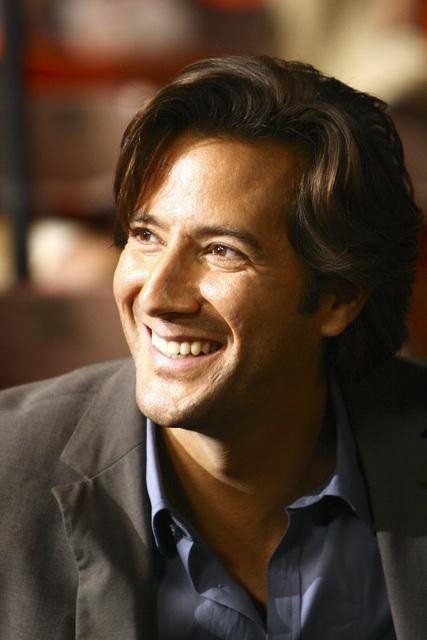
Desmond, played by Henry Ian Cusick, first shows up as the caretaker of the hatch, and promptly takes off in an effort to get the hell off the island. He returns in the second season finale with a flashback, at which point we knew he was going to stick around for awhile. He went from being a half-crazed Scot to a member of the island elite, basically saving everyone's life by activating a fail safe when the hatch starts to go to pieces. Desmond is also the character who is the most personally involved with the craziness of the island; among other things, he has an episode-length flashback where he finds himself back in London, transports his consciousness to a past body on a couple of other occasions, and becomes immune to electromagnetism.
And of course there's a love story as well. Desmond's girlfriend Penny Widmore is the daughter of Charles Widmore, a key antagonist, and he wants nothing to do with Des. It's not like that stops the romance, though it does lead to a separation even worse than what Sun and Jin go through. The scene where Desmond calls Penny on cue after several years in silence is the more iconic one, but the YouTube videos of that have disabled embedding. So I'll give you this:
2. Sayid Jarrah
Your archetypal badass with a heart. Sayid's love life was slightly aggravating, as he seemed to fall in love at the drop of a hat, but in terms of kicking ass he was pretty much unrivaled on the show. His impetus for doing so was sometimes just an order from a higher up, but more often as a matter of conscience, especially if it meant protecting his friends. Sayid has to get credit for managing to kill someone with an improperly loaded dishwasher, but his real shining moment comes at the end of the third season:
Naveen Andrews does a great job taking Sayid through not only a couple of pivotal points in his life, but also through a strange process in the last season in which Sayid is drowned, revived, and may or may not be a soulless minion of the smoke monster. He gets a hero's departure, minimizing the worst of an explosive detonation aboard a submarine (as much as something like that can be minimized) by running the bomb to a more remote location of the vessel.
1. Ben Linus
It would pretty much be blasphemy to not name Ben Linus as the top Lost character, and Michael Emerson has the Emmy to prove it. By the time he appears, halfway through the second season, the story has already established that there are "Others" on the island, people who were on the island before the plane crash who have generally hostile intent toward the Oceanic survivors. So when Ben is introduced, we have no idea whether he's one of those guys or simply the hapless member of a failed round-the-world balloon trip like he claims. For several episodes, he's doing such a good job acting the part that we think the Oceanic guys are being a little bit overenthusiastic. Then this happens:
Even after that, it takes a few more episodes to really pin down that Ben isn't who he's claiming to be. A good portion of Ben's life was spent following in his father's footsteps as a janitor for the Dharma Initiative, but he gives his two weeks' notice by committing mass murder with poisonous gas. He sics the smoke monster on mercenaries. He teleports to the middle of the Sahara Desert. Ben's motivations are so shadowy and his actions so horrifying that it's really never possible to trust him, though from the fourth season on the Oceanic characters are basically forced to accept his help and try to make sense of their current situation. It's nice to see his character wrap up on a positive note, establishing that he was all about protecting the island and its non-evil guardian even if his actions weren't always pure. He not only has the cajones to be a mole in the smoke monster's camp, but he stays on as an Alpert-like assistant to Hurley's career as island guardian. Ben's story is so rich and convoluted that it would probably take a complete re-watching of the series to take it all in, not that that would be a bad thing.
So maybe a Top 10 isn't inclusive enough. Jack could probably get some credit for, you know, saving the world and all...Juliet has an excellent backstory and turns out to be a well-layered character...Sawyer was always fun, even when he was something of a bastard...and so on. But those are my choices for the top tier.
Today's the day quite a few Americans, myself included, get to observe the Independence Day holiday and get paid to do nothing all day even though the Declaration of Independence was signed 244 years ago yesterday. I spent the first part of the day in the arguably un-American pursuit of research of a minor scandal involving a Nixon aide for The Downfall Dictionary, then stopped in for a quick visit at the neighborhood bookstore. This was one of the volumes on display:
The one I saw had an endorsement from Glenn Beck. It gives you pause either way.
I'm not sure how accurate the book is, though hopefully they at least know that while Columbus opened the wave of European exploration of the American continents, the origins of the United States as a country lie more in Roanoke Island, Jamestown, and Plymouth. The book alleges that American history has focused on the more negative aspects of the nation, such as racism and slavery and labor disputes and all the rest. The reader reviews run the usual political line with several five-star raves and a good deal of one-star rants, with those in the middle probably making up the more level-headed folks who take in the good and bad parts of the book. And those reviews at least suggest that the book isn't ignoring the bad aspects of American history, and gives something of a comprehensive if right-leaning perspective.
The patriotism people tout today seems to take on the annoying habit of screaming about why The Other Side is unpatriotic rather than saying what they like about the country. The rhetoric can be attributed to the fringe elements on both sides. Conservatives generally characterize liberals as a group of welfare queens, potheads, and weak-kneed pacifists and tree huggers. Liberals can play too, and denounce conservatives as a clan of idiotic rabblerousers, white trash, narcissistic plutocrats, and violent jerks.
The element of truth in both of them is that there are those people on both sides, and they're probably the ones doing the loudest shouting about what patriotism is. For example, Sarah Vowell is a well-versed essayist with a leftist bent which usually goes along well with her more scholarly work, but not all the time. It kind of rankles in The Wordy Shipmates when she makes a jab about how the Puritan vision of America as a "shining beacon on a hill" has been realized through the bright lights of sleep-deprivation methods used against enemy detainees. Which isn't to say most people playing with a full deck shouldn't be irritated when Fox News pundit Sean Hannity gushes about how the United States is the "greatest, best country God has given man on the face of the earth." It's like listening to a closeted man assure himself that tits are just the bee's knees.
Not to give tits a bad name, of course.
Taking the whole "My country right or wrong/love it or leave it" attitude is completely irresponsible, as it basically makes such purveyors live in a happy little bubble of eagles and apple pie. Shrilly shrieking about everything wrong with the country also isn't a very productive way to reach a consensus.
So what's left? I'd like to think we like the country because it's home, because while the ideologues and DMV lines and hundreds of other things can get on our nerves, there's always the friends and family and getaway spots that make it all worthwhile. Love is healthy, and love for country can be a very good thing. As long as it's not trying to equate country with one's own political mindset, because demanding a populace to conform to a single view as a requirement for patriotism is one of those things that truly goes against the American ideal.
The Google Images results for Happy Fifth of July are surprisingly bikini-heavy. So maybe there's more of a patriotism-breasts connection than I anticipated.
When it comes to religion, I subscribe to a savage mixture of agnostic/deist/Universalist/United Church of Christ ideas. That is, I believe spirituality can play an important role in one's life, and the questions of a grand Creator are quite compelling when it comes to how the Universe exploded out of nothingness and where we go when we die and such, and some of the lessons of Jesus Christ and other figures in the Bible can be quite relevant to the way someone leads their own life. It also means that I don't believe that an Almighty God would be terribly concerned with the sex lives of six billion inhabitants on one tiny planet in the vast cosmos, or that He wants you to burn any Harry Potter book you can get ahold of, or that he shot down the space shuttle Columbia for daring to brush up against his outer veranda.
Whether the creation of life on earth was by a deity or a chance meeting of elements and electricity, the idea of infallibility in such works seems unlikely. I think I remember a Bible chapter in which God was on the verge of destroying humanity out of annoyance, and then there was that whole story with the ark where he nearly did wipe the slate clean. Doesn't sound like the work of someone who made perfect decisions the first time around.
Per Gary Larson, "God as a kid tries to make a chicken in his room"
Humans have been something of a mixed bag. There have been great men and women who advance knowledge and art and are generally major boons to the species, and then there are the sociopaths who spend most of their lives hooked up to the penal system after gunning down innocent victims. Some species out there...well, they may be a part of the planet's delicate ecosystem somehow, but we've already lost the dodo and passenger pigeon and several other creatures, and the rest of us are all still cranking along. So here are some I'm theorizing may have been a mistake, and if you're a mad scientist who can make some sort of ray to get rid of them, be my guest.
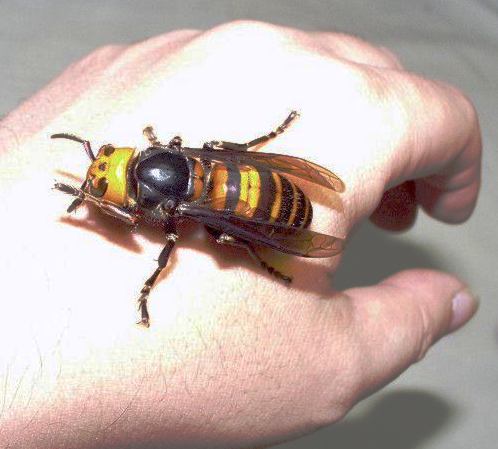
This entry looks at the Vespa mandarinia, or Asian giant hornet.
HOLY SHIT
Hornets are a subgroup of wasps, and though I've never been a fan of the lot of them I think I can safely say that the Asian giant hornet is the worst of the bunch. It's painful enough when a European hornet decides to jab a stinger into you, but these beasts apparently have the muscle and stinger length to put some real hurt on. The common description of the feeling, given by a Japanese entomologist, is that it's like a hot nail being driven into your body. As if that isn't enough, the hornet has a higher-than-normal concentration of the pain-stimulating neurotransmitter acetylcholine, other chemical weapons powerful enough to dissolve human flesh, and of course the lack of a barb for limitless stinging capability. This little jerk is concentrated in the western regions of Asia, where it apparently accounts for more human deaths by animal in Japan than any of the other fauna there. Unfortunately, it has also found Europe to its liking as well in recent years.
If it looks like you should be fighting it in a video game, that's generally not a good sign.
So far, it's a terrifying thing of hurt, but that can apply to a lot of creatures. If we leave it alone it will at least use those giant-looking mandibles to cut down on voracious farm pests or the mosquitoes that spread disease, right?
Oh.
Yes it turns out that the Asian giant hornet has a liking for honeybees and like to swoop in and eradicate hives like they're the helicopter gunships in Avatar or something. It's pretty much a full-on genocide, an unfair fight where they brutally slaughter thousands of bees in minutes. All those nice bees that pollinate flowers and produce honey and the like, gone. The hornets then proceed to rob the hive of all of its valuable resources, including the larvae. They can't digest solid protein, so what happens next, according to Wikipedia, is that they "chew them into a paste and feed them to their larvae. The larvae produce a clear liquid, vespa amino acid mixture, which the adults consume." Which means the hornets gnash infant bees to death with mandibles still bearing the decapitated remains of the larva's parents. And then feed it to their own children only to steal from them as well.
There's that saying, "Karma is a bitch." And there may or may not be the saying, "Burning to death is not the way you want to go." Let's watch the next video.
Assuming there's a whole good vs. evil balance going on in the cosmos, this means that the proportional response for the hornets' crimes is that if they enter the beehive when it's not their day, they're going to get slowly and inexorably burned to death, and/or suffocated. How the bees figured out that this could work, hurting the hornet but not them, is another fascinating aspect of nature.
The Asian giant hornet, ladies and gentlemen. It commits mass murder against a more productive insect, painfully destroys infant versions of that insect, might kill you or me (or at least give one bastard of a sting), looks creepy as hell, and seems to contribute absolutely nothing to the planet. I think this one definitely slipped past the quality control department.
It's not like there's a patriotism meter in the United States to track just how much the approximately 300 million citizens of this country love the homeland. If there was a meter, it probably got a little wonky when patriotism became equated with support for the President, and that definition seems to have fallen out of favor now that the nice Texan has left the White House. The U.S. has always had a federal vs. state thing going, though, and patriotism seems to break down along the same lines.
People might love their country, but they hate the state next door. Ohio and Michigan despise each other because of a football rivalry, and as a Maine resident I know there are plenty of people who think Massachusetts is a few steps shy of Stalin's Russia. Stephen King probably said it best in The Stand, when the residents of Ogunquit hold an emergency town meeting in the midst of a superflu decimating the planet. They vote not to expel the residents who are already sick, at which point someone suggests that the sick out-of-staters might be kicked out. And that's followed by angry vacationers saying how their business has helped to buoy up the Maine economy. Having been to countless town meetings here, I can fully believe that such arguments would happen here if such a pandemic happened.
Generalizing an entire state population isn't really the best thing to do. Still, plenty of people dislike their state or some other one enough to express their hatred online for all to see. I wanted to do a more comprehensive look at phrases, such as "[state] sucks," "fuck [state]," and "screw [state]," but that would take quite a bit of time and omits numerous phrases such as "[state] is displeasing to me," "I would rather hang from my earlobes than go to [state]," and "[state] has no redeeming qualities and we should tear it out of the country and throw it into the Gulf of Mexico to stop up the oil leak."
So I went with a simple tally of "I hate [state]" results on Google. And here are the states that have earned the most hate.
5. Arizona: 281,000 hits
"With this legislation, I shall make Arizona the fifth most hated state in the nation!"
Before Governor Jan Brewer signed a tough immigration bill into law in April, Arizona may have been in the comfortable middle range of hated states. Even with the bill, the home state of the Grand Canyon edges out Kansas, best known for conservative politics and their continued tolerance of super-bigot Fred Phelps and his clan. Now, with opponents charging that Arizona has given the thumbs-up to racial profiling, the second result for "I hate Arizona" is a Facebook group for "I hate Arizona's legalized profiling law." This only has 59 fans, but other sites reference the immigration law as well.
Other complaints: the heat, mostly, as well as other aspects of the weather, drivers, rattlesnakes, expensive candy, the Cardinals, and a lack of things to do.
4. New York: 334,000 hits
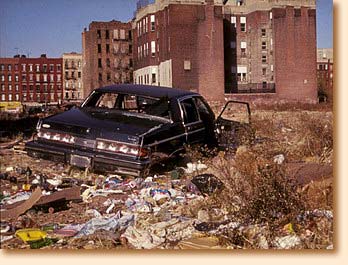
Not post-apocalyptic New York City
Some of this count no doubt comes from the inversion of the "I love New York" merchandise you can find in the Big Apple. And a lot of this hatred probably comes from bad experiences in the city rather than upstate New York. The city has a major cultural scene, it's a huge financial hub, and millions call it their home.
But there's quite a laundry list of reasons people don't like it, too. The pollution, street musicians, beggars, the number of people, the attitude of the people toward non-New Yorkers and other, rent prices and other expenses, crime, and the Yankees.
Not 3. Illinois: 564,000 hits
The reason Illinois has such a big count is this:
Everyone hates Nazis, so I did an advanced search removing them from the equation. Granted, this cuts down on any of the people who are actually complaining about any of the Nazi organizations in Illinois, or any of the whiners who have resorted to Godwin's Law in their issues with the state. But the adjusted result puts Illinois at 140,000 hits, or number 15 on the list of most hated states.
3. Kentucky: 751,000 hits
Even the dogs hate it.
It seems like the Bluegrass State is disproportionately high because of a sports rivalry. The Kentucky Wildcats of the University of Kentucky in Lexington have a major feud with the Louisville Cardinals of the University of Louisville in that city. Both are in Kentucky, which means the residents are quite the self-hating bunch. But it's easier to say "I hate Kentucky" or "Kentucky sucks" if you're a Louisville fan.
There are some complaints about the state rather than the university, though. They're the usual run of gripes: the attitude of the residents, deteriorating infrastructure, road rage, and the people who just plain don't like bluegrass music.
2. North Carolina: 882,000 hits
I would have thought South Carolina would be more hated. Considering the political divide, and the fact that South Carolina has pretty much been the headquarters of conservatism since the Civil War with the latest incident involving a jerkass senator calling both his Republican primary rival and the President "ragheads."
But no, South Carolina garners only 52,900 hits and comes in 31st overall. North Carolina is another self-hating state thanks to sports. The University of North Carolina has a rivalry going with Duke University, and both are in the state but one faction hates Duke while the other hates "North Carolina." It looks like unpredictable weather, the fact that you have to take a side in the basketball war, and drivers make up some of the other issues boosting this count.
1. Nevada: 1,670,000 hits
Really? I never would have expected this. That count is just about a million shy of the population of the state itself. As far as I know, all that's there is Las Vegas, Area 51, and a wide array of nuclear bomb craters. What, are people upset that Nevada gave the presidency to Matt Santos in the fictional election in The West Wing?
Ooh, that durn Mexifornian'll never be MY President!
It seems that relative lack of things to do is what has led people to put Nevada down on the Internet, though. Some commentators say that they despise the state even if they like the people and other aspects of their lives, since it's so hot and dusty and dry. Some of these phrases come from MySpace drama queens who probably hate carrots with as much furor, though. The police make a few appearances as well, and complaints about video games featuring Nevada levels also add to the count.
So what are the least hated locales in the United States?
5. Washington State: 20,700 hits
I expected that Washington might show a false result by the amount of people complaining about the nation's capital. Instead, it came up with this modest figure. I've never been to the state, but it seems like it's got quite a bit of natural beauty in the Cascade Mountains and other areas, plus a terrific city in Seattle.
The complaints that do emerge are the usual fare: drivers and the weather. There are also a few complaints about the state and local government, but doesn't that happen everywhere?
4. New Mexico: 18,600 hits
Awe-inspiring landscapes and UFO crash sites. What's not to love?
Well, the first result is a blogger mildly chastising the state for providing a new home for her best friend, since she wants to be closer to her. And a bit of weather and stuff-to-do complaints show up before Google says the results are pretty much spent.
3. New Hampshire: 17,600 hits
It's always amusing to drive through New Hampshire and see the signs beckoning visitors for cheap booze and cigarettes, plus legal fireworks. It's like all of the fun stuff concentrated in the not-quite-center of New England. The state has a couple of nice little cities, plus the natural splendor of the White Mountains.
One blogger hated it enough to start a seven-part series on his feelings, with the first part looking at winter and black flies. Other complaints generally fall along the same lines before Google runs out of results.
2. North Dakota: 16,200 hits
I'm starting to think North Dakota is something of a national secret. The last I saw, the unemployment rate was next to nothing, and of course you get this rather favorable feedback. It's like a clubhouse that tries to pass itself off as lame to keep outsiders out. Those who do have grievances with the state say there's never-ending winter and nothing to do. I'm sure if they moved to Nevada they'd be fine.
1. Rhode Island: 11,500 hits
Rhode Island is the smallest state, so you really shouldn't pick on it. Plus it's got a nice-looking city and a lot of culture crammed into that modest acreage. Those who don't like it have the same old song and dance: weather, drivers, and stuff to do.
Interested in where your state ranked? Here they are!








 Posts

