Sunday, April 3, 2011

Break Out The Sad Tissues: The Dragon In My Dreams

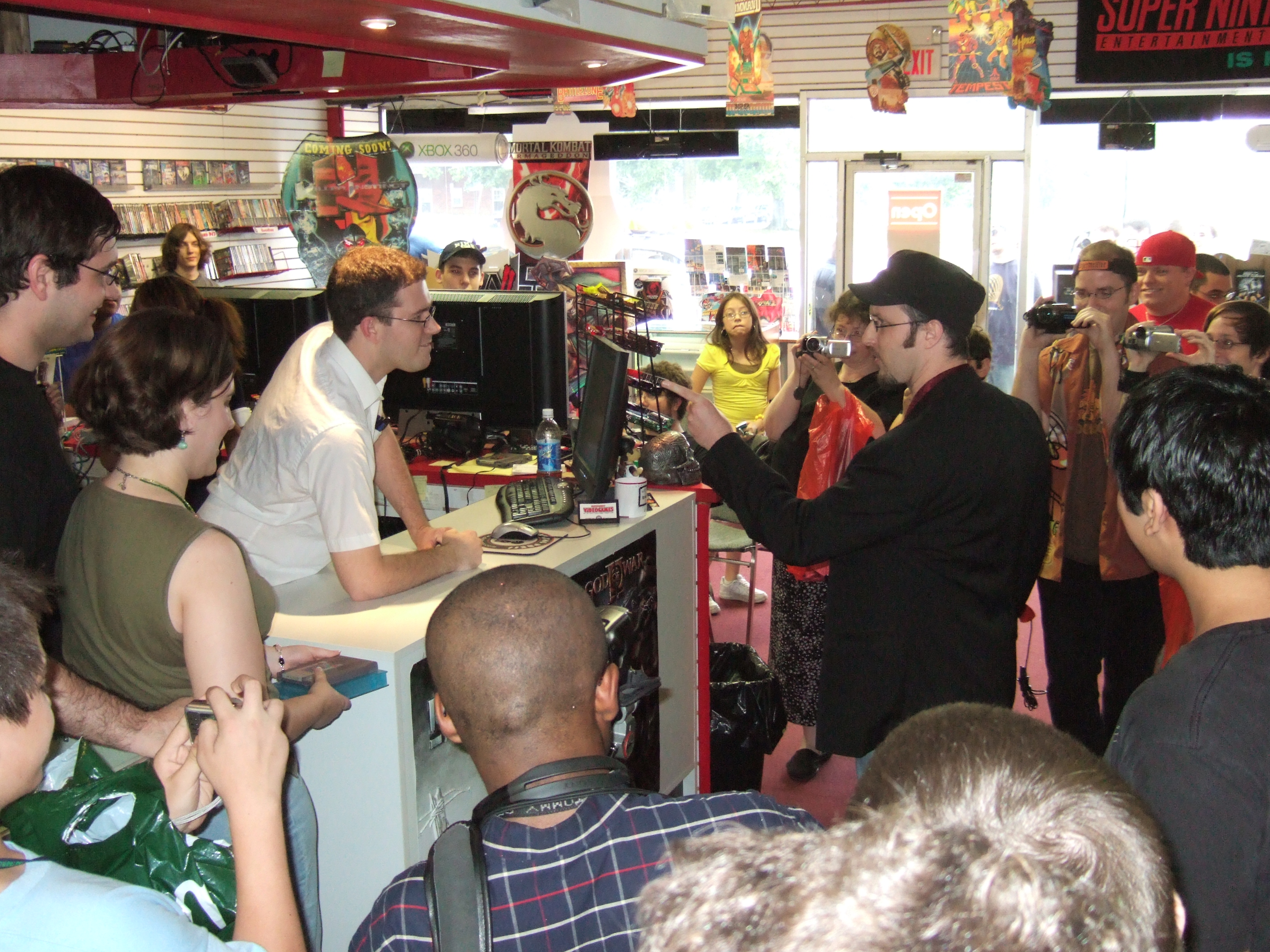
I don't link too many sites off this blog, and there are various reasons for that. First and foremost is the fact that I like to write blog posts but generally have to construct them in bits and pieces during periods of free time, and they're sporadic enough as it is that I don't spend too much time working with the layout. There's also the fact that I don't have a huge array of websites that I follow, and I find that the ones I do generally give me a laugh after a day of work. One of the ones that updates more infrequently but is well worth it when it does is Cinemassacre Productions, home of the Angry Video Game Nerd.

"It fucking sucks, it sucking fucks, it fucking blows, it's a piece of shit...and I don't like it."

Rolfe first launched the Angry Video Game Nerd in 2004. It's a character rather than his true personality, since he's rather polite and soft-spoken in interviews while the Nerd is constantly sarcastic, enraged, profane, and psychotic. Using what seems like every video game system in the world and the crummiest of their associated games and devices, Rolfe then proceeds to rip into the flaws of each one, usually with a good deal of obscenity and over-the-top antics (up to and including the destruction of the most flagrant games).The videos vary in length, usually 10 to 20 minutes. Between scripting, editing, special effects, and other components, it seems like Rolfe usually manages to get one episode of the Angry Video Game Nerd out a month, although he also does a lot of videos on other pop culture from the 80s and 90s. Like any good nerd, he shows particular affection for Ghostbusters, Indiana Jones, and horror flicks.

One might be forgiven for watching Rolfe's Angry Video Game Nerd installments and assuming he's a "failure to launch" despite being an Internet celebrity. After all, his videos are mostly shot from a futon in a basement festooned with Nintendo Power magazines and a plentiful supply of Rolling Rock. This doesn't seem to be the case, though. Rolfe is mostly a private person, but has done some professional video work for Spike TV as well as a small videography company in Philadelphia. Somewhere along the way, he even got married.

Rolfe has shared several of his earlier projects, and one or two videos about his evolution as a filmmaker. Still, it was a bit of a surprise when Rolfe released a video looking into how and why he got into the craft:


The summary of this video, for those of you who didn't care to watch the entire thing: Rolfe drives along in search of his "fountain of youth," commenting how he's about to turn 30 and has made over 300 movies. Recalling how he's been wielding a camera since he was a child, he wonders where his creative drive comes from. He traces it to a recurring nightmare where he is attacked by a dragon. Rolfe visits his mother, who remembers how a concrete dragon feature was part of a park near the hospital where he was born and Rolfe thought it was awesome. Sometimes we're just drawn to the things that terrify us, he muses as he gives a brief biography of how he got into making movies, spent time in college, and held a variety of the jobs in the video field.

"I owe it all to the dragon, and now it's time for a reunion," Rolfe says as he pulls up to his old playground. He is overcome with emotion as he arrives at the dragon, aged and flaking paint but still standing. The park is under renovation and by a stroke of luck he's visiting on the last day the dragon will be as he remembers it in his childhood. "It's time to say goodbye to the past, time to move forward and create those movies in my dreams," he says. "Because dreams are where it all started." Rolfe looks back sadly as a construction worker resumes jackhammering around the dragon, then composes himself and drives away. The film concludes with the park (dragon still visible) fading into the distance, a short montage of photos from Rolfe's childhood, and a thank you to his parents.

Some of the movie has a bit of a staged feel to it, such as when Rolfe first reacts to the dragon. In fact, as this "outtakes" video reveals, Rolfe did indeed stage part of the video. He admits that the actual first encounter with the dragon in a couple of decades was different than what appears in the video, but also notes how you can see that his feelings are the same as what he portrays. He thanks the workers for letting him film the scene, wistfully commenting on the sentimentalism of others.

Still, there's something about the video that's very touching. To a certain degree, Rolfe is living a warped version of his childhood. He's usually in front of an NES or similarly antiquated system and surrounded by materials left over from when he was younger. He's still cranking out the Angry Video Game Nerd videos, so he hasn't entirely given up on it. But his final reflection is essentially Rolfe saying farewell to his past, which the dragon represents as something you can never revisit in exactly the same way. It's easy to get sentimental about the places from our childhood, especially as we get older and those places change.

I'm only a few years shy of Rolfe's age, and there are a lot of things from my childhood that I've lost, ranging from the original building my elementary school occupied to my uncle. It's a reflection on life: it's always a little bittersweet, as we are saddened by the things we lost and hopeful for what lies ahead. It's optimistic, but it can still bring a tear to your eye, though.

Saturday, February 5, 2011

Top 10 Half-Life Loose Ends

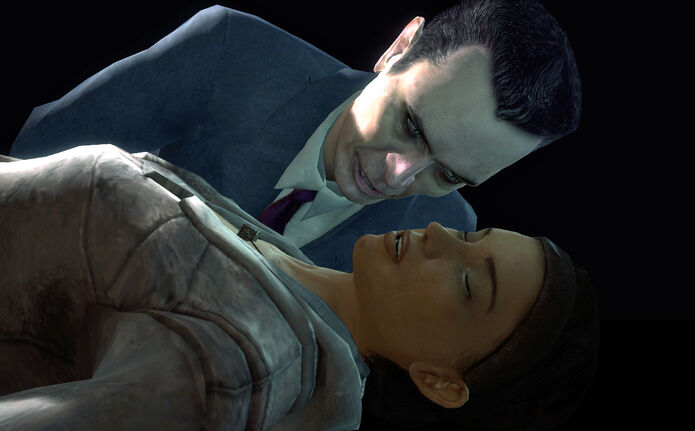
"I can't close my report until every loose end is tied up." --G-Man

I'm a fan of the Half-Life games, though I was a bit spoiled in that I started off with Half-Life 2, arguably the best in the series. In 2007 its second sequel, Half-Life 2, Episode 2 was released in a package with its two predecessors, which a friend deeded to me via the game platform Steam since he already had them. Half-Life 2 and its sequels have some pretty good graphics, great atmosphere, engaging characters, cool weapons, and in general a lot going for it. There's a third episode sequel set to come out and wrap up the entire series, but unfortunately the developer, Valve, has been dragging their feet on it. They've put their focus on the fan bases of the associated Portal and Left 4 Dead games, cranking out a couple of them while Half-Life languishes.

I doubt Valve has given up on the whole enterprise, especially when they're this close to concluding it. One possibility is that they're expanding the shorter sequels to Half-Life 2, which usually take about six hours to complete, to a full-fledged conclusion. There are more than a few questions that need to be answered, though. And here are my picks for them, with all images supplied via Combine Overwiki:


10. What's going on in the rest of the world?


Half-Life
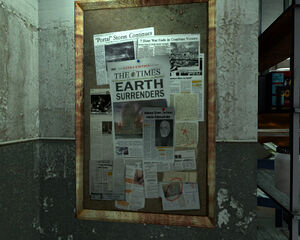
started things out at a classified research base in New Mexico, but the survivors of the Black Mesa Incident wound up in some locale in Eastern Europe known only as City 17. How exactly this happened is unclear, though it's hinted that Earth's population is being subjected to a lot of forced relocation. The Black Mesa administrator, Dr. Wallace Breen, negotiated a speedy surrender to the Combine, has chosen to live in relatively comfortable conditions atop the skyline-dominating Citadel and he and/or the Combine have opted to situate their headquarters in this location. The only other place we really see is New York City, in a newspaper clipping in Eli's workspace.

The Combine have put a halt to reproduction, meaning humanity's been slowly dying off for 20 years when Gordon is reawakened. Still, there must be a fairly significant population left and the games from Half-Life 2 on have all been in City 17 and the vicinity. Obviously, this constitutes only a small portion of the planet. Are there other strongholds on Earth, perhaps Cities 1 through 16? How's the resistance there doing?

Likelihood of resolution: Unlikely, considering we don't even know exactly where City 17 is. Half-Life games have always kept in one general area, and even with Gordon and Alyx likely to fly to a polar region they probably won't be stopping off in Berlin for a quick jaunt. The game probably won't end in a single, smashing victory against the Combine that liberates Earth, either. And as a post on TV Tropes points out, even if the Combine are defeated the planet will still be infested with Xen wildlife, with most of the original Earth species extinct.

9. What happened to the rest of the Xen creatures?


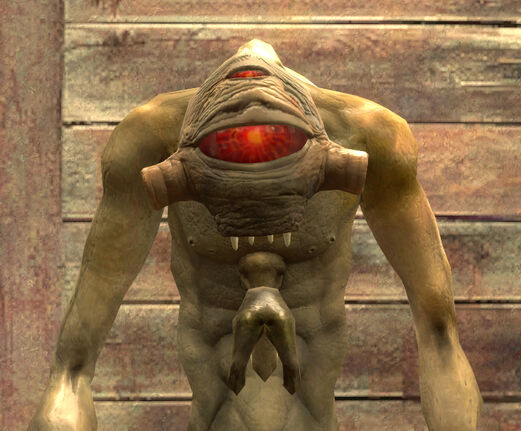
Through the course of Half-Life, Black Mesa is invaded by a wide variety of creatures from Xen. These include zombifying little things called headcrabs, electricity-shooting Vortigaunts, long-tongued barnacles, water-dwelling icthyosaurs, acid-spitting bullsquids, blast wave-producing houndeyes, hovering humanoid aliens that shoot energy balls at you, armored troops with arms that fire insect-like ammunition, and gigantic Gargantua beasts. In the sequels, the first four make an appearance although the Vortigaunts have become your allies and the icthyosaur makes a cameo. The rest of the creatures are never seen.

The explanation no doubt has to to with the developers not being able to cram everything into Half-Life 2, and the game is probably better for keeping only some of the old enemies and introducing new ones. Still, it's unclear whether other Xen creatures are roaming about and what may have happened to the ones that disappeared after their initial invasion.

Likelihood of resolution: Unlikely. The sequels ditched a few aliens and brought a few new ones in, and the players seem to be happy with that.

8. Where is Barney Calhoun?


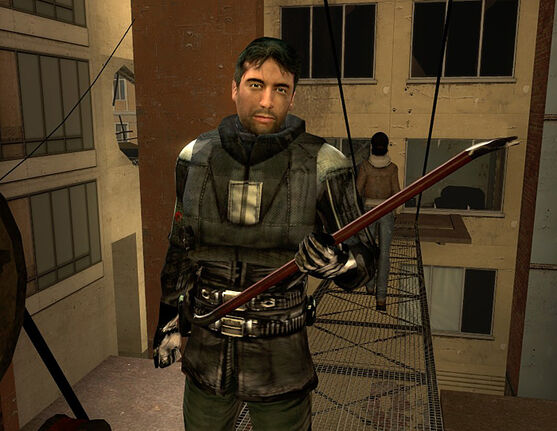
Like most of the Half-Life characters, Barney Calhoun is much-beloved: resourceful, slightly sarcastic, and battle-hardened. He makes his first appearance in Blue Shift, a pre-Half-Life 2 expansion, where he manages to rescue a few scientists and get away from Black Mesa in the midst of the chaos. After that, he sticks with the Black Mesa crew and infiltrates Civil Protection, a low-level unit of civilian collaborator troops, to assist the City 17 resistance from within.

In what may have just been a case of too little room, Barney doesn't make an appearance in Episode 2. He is last seen in Episode 1, on board a train evacuating City 17 with several other civilians. It had several minutes' head start on a second train boarded by Gordon and Alyx, which was derailed in the Citadel explosion, but there was no word as to whether Barney's train outran the blast. Gordon and Alyx spend most of the second episode fighting their way to the White Forest base, meaning we don't see any other characters in person until they get there. To that end, it makes sense that Barney is excised although it is a little odd that he doesn't make so much as a cameo (with the arguable exception that he congratulates Gordon on a job well-done at the end of a massive battle that concludes Episode 2) while an entirely new character is introduced. With Gordon set to head to a new environment, it remains to be seen whether Barney will be along for the ride.

Likelihood of resolution: We may not figure out what he's been up to in the interim, but it seems likely that we'll see him again.

7. How much has G-Man's original plan been altered?


Half-Life 2 ended with G-Man on the verge of putting Gordon into stasis again after only a few hectic days on the Combine-dominated Earth (or weeks if you count the jump through time in a collapsing portal). In that short time, he accomplishes quite a bit: he decimates many of the Combine defenders in City 17, inadvertently starts a major uprising, kills Dr. Breen, and causes the full-scale meltdown of the dark energy reactor atop the Citadel. At that point, G-Man freezes time and prepares to cart Gordon off, leaving Alyx to die in the explosion and his former Black Mesa colleagues and other rebels to fight for themselves. But then the Vortigaunts step in, rescuing Gordon and Alyx and keeping them in the present time.

It doesn't seem like too much is affected by Gordon staying put. The Citadel melts down, destroys the city, and leaves a gaping superportal overhead which threatens to bring the full brunt of Combine reinforcements to Earth. It's sealed later on when Gordon helps fight off a last-ditch attack on another rebel stronghold and a rocket is launched to take care of the problem. It's kind of up in the air as to whether the resistance could have handled this on their own, but Gordon certainly helped things along. It's entirely possible that the rocket would have failed to launch, given that Gordon and his gravity gun were the main factors involved in destroying the powerful Striders advancing on the base. So what was G-Man's original plan for Gordon, and when and where was he going to be deposited next? Did G-Man aim to help the resistance in some way or allow Combine forces to come to Earth and wipe out humanity once and for all?

Likelihood of resolution: This question is likely to be resolved when we find out what the deal is with the G-Man.

6. What are the Vortigaunts planning?


From their ability to wipe out a massive invasion of antlions with hand-fired bolts of electricity to their seemingly psychic ability to heal Alyx, the Vortigaunts are some seriously powerful creatures. Their show of staving off the G-man and rescuing Gordon and Alyx from the Citadel after stopping or slowing time is certainly their most impressive act thus far. How they were able to perceive what was going on, get to the top of the Citadel, and deliver the two to safety before disappearing is likely to remain just another mystery as to how they can do what they do.

However, it begs the question of what the Vortigaunts have in mind. Were they just trying to rescue a couple of resistance members and happened to interfere with the G-man along the way? Or is G-man a force of evil that they're trying to fight?

Likelihood of resolution: It's possible that this might get swallowed up as a bit of a plot hole, or simply ignored. The Vortigaunts have allied with humanity, but given that they speak in riddles on larger matters they might keep it somewhat cryptic.

5. Will Race X return?


In Opposing Force, Adrian Shepherd witnesses Gordon jumping into the portal to Xen; from there, he sees what goes on at Black Mesa in that unseen time after Gordon's departure in Half-Life. The main development: a completely different set of aliens who start infesting the facility and provide cool new weapons such as an electro-burst biological arm and another living weapon that shoots balls of acid.

And then the aliens simply disappeared. Part of this seems to be a result of Adrian Shepherd defeating the giant worm poking his head through a portal in the final boss; Combine Overwiki said this is a "Gene Worm," a forerunner of Race X colonization efforts. Perhaps Race X would have been duking it out with the Combine for domination of the planet, but the defeat of the worm left Earth to the Combine.

Likelihood of resolution: Race X may have simply been written out with the above scenario. It's unlikely that we'll see them again, despite some fans' hope to get a chance to electrocute things again.

4. Is Adrian Shephard coming out of stasis?


Opposing Force rounded out the perspectives on the first Half-Life game quite nicely. The original was from the viewpoint of Gordon, a scientist, and it was followed by Barney, a security guard, in Blue Shift. Opposing Force put you in the boots of Adrian Shephard, one of the rather unsympathetic grunts who spent the prior games gunning down Black Mesa employees in a poorly executed cover-up plan. Shephard crash-lands in the action not long before Gordon teleports to Xen and is prevented from evacuating by G-Man, leaving him to clean up the Race X invasion virtually unassisted. G-Man thanks him for this job well-done by getting him out of the facility before it is obliterated by a nuclear weapon, having had to make a case for keeping Shephard alive, and detains him pending "further evaluation." Shephard hasn't been seen or heard of since.

By humanizing the soldiers and adding some G-man interaction pretty much on the par of what Gordon experienced, Shephard became fairly popular with players and there has been a decent amount of speculation as to whether or not he will return. The closest thing to a reference to him has been in companion game Portal, which features keyboards with the letters included in Shephard's name highlighted. The developers claim, somewhat unconvincingly, that it is a mere coincidence.

Likelihood of resolution: Episode 3 is likely to be the last game in the series. If Shephard shows up, he may have to get a secondary speaking role unless the first-player action switches between him and Gordon. It seems like it might be a little difficult to shoehorn Adrian into this part of the narrative, however, so he might be left off.

3. What is on board the Borealis?


One nugget which will have to be explored before the series wraps up is a mystery introduced in Episode 2. A bit of data painstakingly smuggled out of the Citadel and brought to White Forest by Alyx shows footage of the Borealis, a ship belonging to Aperture Science that mysteriously vanished, along with a portion of the dry dock, back in the days before the Black Mesa Incident. Kleiner thinks the discovery of the ship means the resistance can turn the tables against their foe, while Eli thinks doing so could lead to a catastrophe on the level of the one that got Earth invaded in the first place. Mossman, meanwhile, is apparently in the region fighting Combine defenders to try to get to the ship while advance art shows the thing already swaddled in Combine mech.

As a more video game savvy friend pointed out, the clues are pretty much all there as to what will be in the ship. In Half-Life 2, Mossman mentions that the Combine are struggling to develop the teleportation technology that the resistance has gotten relatively under control. In this way, they have a slight advantage over their alien overlords (which increases once an invincible badass physicist enters the fray). The Borealis, meanwhile, is the property of the company featured in Portal: a game about a gun that allows you to use a handheld device to create inter-dimensional doorways. Uh-oh.

Likelihood of resolution: Certain. Valve wouldn't introduce the Borealis without taking care of the question of what's on board.

2. How do you defeat a Combine Advisor?


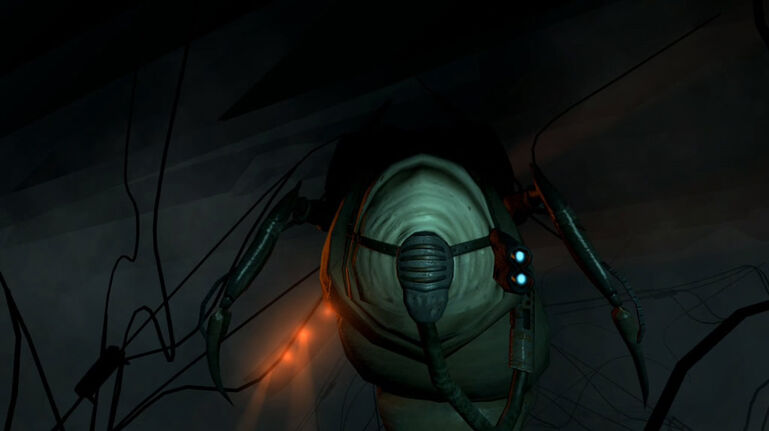
The Combine Advisors may be the brain bugs behind the entire invading force. Resembling giant grubs, they make their first appearance in Episode 1 and Gordon has several unpleasant close-ups in Episode 2. The Advisors are ridiculously powerful, having the ability to telekinetically hold people in place (or break them in half). Getting near one leads to some psychic bursts that impair your vision and coordination. When we last saw them, the Advisors were sucking out some of Eli's vitals.

It looks like the Advisors can be hurt. Eli gets in a few whacks with a pipe before he's killed, and Gordon and Alyx are saved because Alyx's pet robot DOG comes in and wrestles an Advisor, sending it scurrying off. The developers have said you'll go head to head with at least one Advisor, but there's still the question of whether you can do that with your existing weapons or if you'll need a new one.

Likelihood of resolution: Should be addressed, given the developer commentary.

1. Who/what is G-Man?


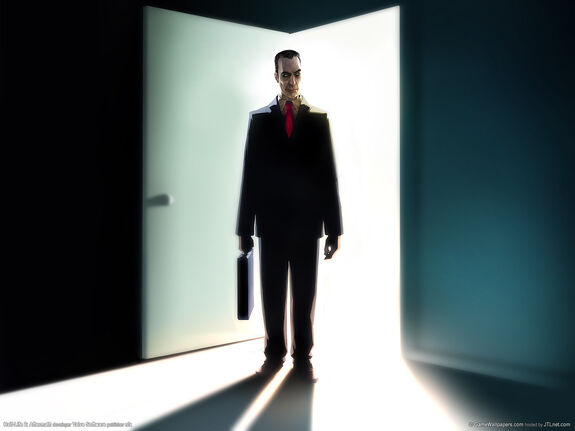
This is the big one. G-Man first showed up in the original game, watching Gordon's progress through Black Mesa from inaccessible points and finally appearing to Gordon after he defeats the game's big bad. The final sequence suggests that G-Man might not even need Gordon that much, since a refusal of his job offer merely sends Gordon off to die in some alien-infested landscape. Indeed, he's shown to have had some interaction with Eli, Alyx, Breen, and Shephard, and was apparently keeping an eye on Barney for awhile. G-Man seems to be something of a chessmaster, putting people in situations and seeing what they can do, but also takes direct action such as reactivating the nuclear bomb at Black Mesa after Shephard defuses it.

It's unknown whether G-Man is trying to help the resistance or the Combine, or whether he's falling somewhere in between. It's not even clear what he is. He obviously has some superhuman abilities, what with the ability to stop time and all, and one description suggested that he seems like something doing a somewhat passable impression of a human. Another suggestion is that he is Gordon from the future, a theory plausible enough that it may have been the original intention but may now be something different if the developers decide they need a more surprising reveal.

Likelihood of resolution: This is what people have been wondering about for 12 years. They'll have to offer some sort of explanation.

Tuesday, January 25, 2011

Whatever Happened To: The Rest of the Cast of The Adventures of Pete and Pete

I had a lot of fun writing the last blog entry on what became of the cast from The Adventures of Pete and Pete, and it inspired me to check out the episodes again. The show had a rather impressive list of more famous actors who were getting their start or perhaps just having some fun on a well-written show. One that leaps right out is Steve Buscemi, who played Ellen's father, but you also had such talent as J.K. Simmons as a barber and Selma Blair as a girl Big Pete had a crush on.

It also turned out there was an entire second tier of people who played a significant role in the series. Here's what I could find on them.

Maris Hudson (Monica Perling)


Monica was a rather strange character, so of course she was a pretty good fit for Little Pete's group of friends. Her debut episode had her consoling Little Pete on pet loss, since she had an entire back yard full of short-lived animal companions, and she was also heavily reliant on her training as a "Kreb Scout" (one of the running gags in the show being that virtually everything was of the Kreb brand). She doesn't seem to be one of the better received of the characters, though, given her bossy attitude and the fact that the writers started to lean a little heavily on Little Pete's friends for material later on.


The show credit is the only one for Maris Hudson on her IMDB page, though a note there said she performed and was nominated for a supporting actress role in the musical Fiorello! in 2007. In that case, this is what she looks like today, according to this website. She's apparently been doing quite a bit of other theater work in the Chicago area.

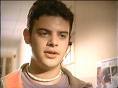
Justin Restivo (Wayne "The Pain" Pardue)


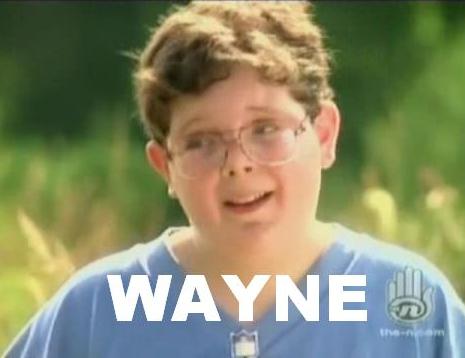
Ah, one of the most adequately named Pete and Pete characters. Of all the kids in the show, Wayne might be the closest one to what you'd expect to find in a kid who grows up in our world rather than one dominated by the Kreb Corporation and superheroes; he's still a little annoying, though. Aside from having a crush on Monica, Wayne was basically around to spout off some random trivia and trip over his own feet. Thankfully, he was at least somewhat endearing.

Given this recent photo, Justin Restivo obviously slimmed down a little since his role on the show and got cooler glasses:


Oddly enough, Restivo has a credit as a bully on The Conan O'Brien Show at the same time he was appearing on The Adventures of Pete and Pete as a complete wuss. He played Lumpy in the 1997 atrocity that was the Leave it to Beaver movie and, judging by the gap in his IMDB page, that got him blacklisted from Hollywood for just about 10 years. Now 27, he's recently returned in uncredited roles, including a French waiter in The Devil Wears Prada and a Yale student in The Good Shepherd. Assuming this Twitter account is his, he's living in New York City and still close enough to the acting world that he attended the 2009 Tony Awards.

Rick Barbarette (Bill Korn)


Bill Korn was one of Big Pete's close friends, perhaps even his best friend, though he sort of got shunted aside as the show went on. His main character trait involved his having an affinity for jokes, such as trying to get Teddy to snort milk out through his ears and convincing an undercover cop that Bus Driver Stu Benedict was kidnapping everyone.

The role marked the only acting gig for Rick Barbarette listed on IMDB. A Pete and Pete fan site, now disappeared, apparently had an interview with him. This site credits him for sending in some pretty terrific candid shots from the set. By the looks of this Twitter page and its associated MySpace page, he might be the drummer of the Hollywood-based band All Star now. Either that or he's teaching math in Cedarhurst, New York. But the band photos look like him.


David Martel (Teddy Forzman)


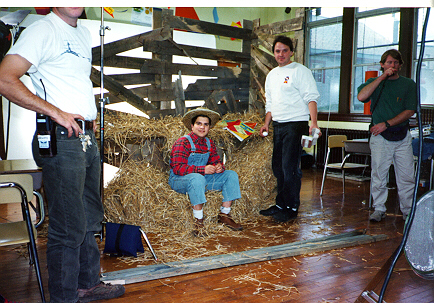
Pictured is Teddy Forzman before he was really characterized too much, in a candid photo submitted by David Martel himself to that nice Pete and Pete fan site. The context: an episode focusing on the relative pointlessness of math word problems, and the lengths Teddy goes to in order to try to solve the questions (in this one, a problem related to a chicken's egg production). Though originally more of an accessory character, Teddy was given some more background in an episode where he stays with the Wrigley family for awhile. From then on out, he was a rather unflappable fellow with encyclopedic knowledge of numerous obscure topics, which he would follow up with the catchphrases, "What, you guys didn't know that?" and "Excelente!" Though arguably his best moment comes in impersonating Endless Mike to help Big Pete prepare for a wrestling match.


And now, he looks exactly the same at age...well, that doesn't seem to be available. Martel has a few scattered credits after Pete and Pete, namely the highfalutin role of "Person" in two episodes of Arrested Development and several one-off characters in Scrubs. According to his LinkedIn profile, he's now a consumer and channel marketing analyst with the Samsung HDTV Team in Los Angeles.

Christopher Conte ("Papercut")


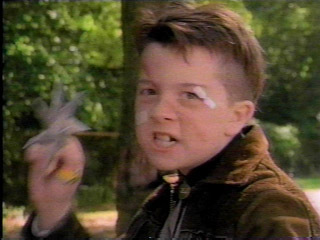
The comments on the YouTube videos of the episodes usually had a few friendly debates over which one of Little Pete's enemies was the best. Though he only appeared in one two-part episode, most people remembered Papercut. One of the more menacing villains in the show, he grew up in a copy shop and was characterized by a bad haircut, a variety of nicks and small wounds, and the ability to make terrifying origami weapons. The episode revolved around Little Pete trying to confront him without Artie's help after bucking the trend of always throwing rock to Papercut's inevitable paper in a rock-scissor-papers match.

The actor who played Papercut disappeared after only two more roles around the same time: one in The Jerky Boys and another in The Indian in the Cupboard. I couldn't find much else on him, though there's a pretty talented prosthetist-turned-artist out there by the same name who specializes in biomechanical sculpture.


Eric Kushnick (Fran "Pit Stain" Jones)


Another of the recurring tormentors of Little Pete, Pit Stain got his unflattering nickname from the younger Wrigley due to his propensity to sweat profusely for no apparent reason. Pit Stain also had a bit of a softer side, though. In an episode in which Little Pete tries to keep Christmas going as long as possible, Pit Stain is awestruck by heaps of garbage decorated with lights (long story) and works undercover with Little Pete and his friends to pull a prank on a truly atrocious school assembly about hygiene. He also has a small bully gang consisting of a kid nicknamed Drawstring, because he always wears sweatshirts, and a girl named Hairnet because, well, guess what she wears.

I wonder if Eric Kushnick's contract had him take smell-oriented roles for the early part of his career, since a few years before Pete and Pete he played Sidney "Skunk" Duff on the short-lived series Hi Honey, I'm Home. He had a few bit roles in a variety of TV shows (including Spin City, Felicity, and Boston Public) before this modest list of on-screen roles petered out in 2001. Beyond that, he seems to be keeping a low profile. Unless he's the director of hardware engineering at Credence Systems Corp. or vice president of the research and development center of Advantest America, both in California, I have no idea where he is now.

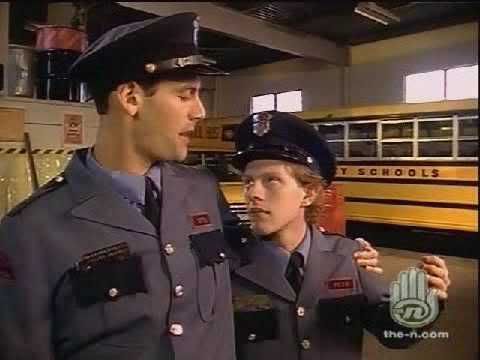
Damian Young (Bus Driver Stu Benedict)


Stu seemed to have just a touch of bipolar disorder, given that he was usually a bright and sunny fellow but was always right on the edge of a complete freak-out. He occasionally used the slight degree of authority his job gave him to resolve some issues, but more often he moped about in a perpetual lovelorn state since his on-again-off-again relationship with a fellow bus driver was usually set to off. For all that, Stu was absolutely hilarious and had a good heart as well.


Damian Young got his start in theater and had a few minor roles under his belt by the time he played Stu Benedict. After Pete and Pete, he kept cropping up in a number of obscure roles (including "Crab Nebula Guy" in a TV movie about the 1993 bombing of the World Trade Center and "Green Army-Jacketed Man" in Unbreakable). He had a stronger role in the one-season HBO comedy The Comeback in 2005, resorted to playing a doctor in six episodes of the soap opera As the World Turns the next year, and then started landing recurring roles on more well-known shows such as Californication, Damages, and Law and Order. He's still acting, set to play Serge in Art Machine and Sanders in Seven Chinese Brothers, both movies which will be released in 2011.

Rick Gomez ("Endless Mike" Helstrom)


One of the more memorable characters in the series, "Endless Mike" Helstrom was a bully to both Petes. He has some great lines, mostly involving deadpan sarcasm, and takes his dislike for the older Pete to such extremes that he gives up a kidney and tooth just to be able to get into the same weight class as Big Pete and take him on in a wrestling match. Other times, though, Mike agreed to help Pete try to solve some problem or even tried somewhat successfully to have Big Pete join his merry band of troublemakers.


Richard Harper "Rick" Gomez, now 38, has kept up a pretty good run in the acting field. He seemed to have a gap in the late 90s, but in recent years he's been more active. His roles include quite a bit of voice work, including a brief appearance as the pilot in "The Final Flight of the Osiris" chapter of The Animatrix, Zack Faire in Final Fantasy VII and Kingdom Hearts: Birth by Sleep, and various characters in The Angry Beavers, Courage the Cowardly Dog, and Cow and Chicken. Perhaps most notably, he played Sgt. George Luz in the miniseries Band of Brothers and Klump in Sin City.

I should also mention his bit role in 11:14, if only because it's a lesser-known but still terrific movie involving a few interconnected stories beginning with a body dropped from an overpass. Most writers who can do that can pull it off, and the actors include some more well-known people as well (Hilary Swank and Patrick Swayze). Gomez plays a paramedic, along with then still relatively unknown Jason Segel.

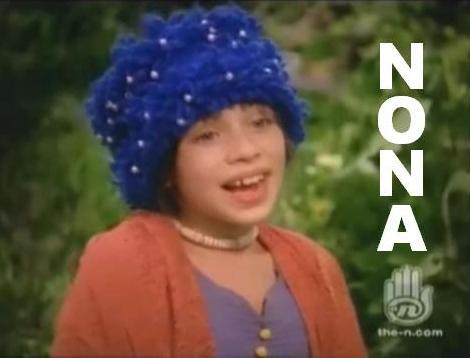
Michelle Trachtenberg (Nona Mecklenberg)


Nona became a sort of warped version of Ellen for Little Pete, though there was never any romance between them aside from a spring fever episode where everyone was falling in love with everyone else. She first met the younger sibling after moving next door and discovering that he was trying to tunnel out after getting grounded. Among other quirks, she wears a cast because she likes the itchy feeling and in one episode has a lunchbox capable of holding a full dinner spread. Oh, and her father is played by Iggy Pop.


Perhaps the number one comment of the later Pete and Pete episodes on YouTube: some variation of the phrase "I can't believe Nona is hot now." Michelle Trachtenberg, now 25, went on to a couple of roles in children's movies including the title character in Harriet the Spy and Penny in Inspector Gadget. She got her break in 2000 when she showed up inexplicably as Dawn Summers, sister to the lead character in Buffy the Vampire Slayer. Trachtenberg has faded into the background just a bit, but has still had a few notable roles including Jenny in Eurotrip and Celeste in Six Feet Under. She also lends her voice to Robot Chicken, the brainchild of fellow Buffy veteran Seth Green, including a memorable appearance as the voice of a gummy bear stuck in a trap.


Trachtenberg currently voices Valkyrie on The Super Hero Squad Show and will next appear in the movie Take Me Home Tonight.

Wednesday, January 5, 2011

Top 5 Fictional Characters in The Simpsons

Yes, The Simpsons is a fictional show. But they have a few shows within the show, or other fictional characters, and some of them are pretty damn funny. So here's a Top 5 list for that.

5. Worker and Parasite


Nothing against the incredibly violent duo Itchy and Scratchy, another show within the show which doesn't appear on this list. If anything, it's a testament to the fact to the strength of Itchy and Scratchy that there's so little quality cartoon material in the Simpsons world that Krusty has to resort to material like this when he loses everyone's favorite cat and mouse duo to The Gabbo Show. It's hilariously random, and the only clues to the meaning of the video are the line of peasants and the increasingly aggravated growls of one of the duo. It's not even clear which one is Worker and which one is Parasite.

4. McBain

McBain is an action star in the style of Arnold Schwarzenegger, quite an obvious analogue given his brawn and thick accent. The early examples had him in movies chock full of cliches such as partners dying just before retirement and a renegade cop who uses unorthodox methods that always aggravate his chief, like so:


This is a great example of the classic Simpsons episodes supplying high-quality humor in under half a minute. McBain's complaint about not being able to avenge his partner's death with a "pea-shooter" is funny enough, the chief's rant about his hand cannon is also great, and it's all topped by the ridiculously over-the-top way of getting around the book. Strangely enough, there actually was a McBain movie starring Christopher Walken and Luiz Guzman, among others:


If Wikipedia is correct, The Simpsons had actually used the McBain name before this movie came out, but somehow the movie studio (20th Century Fox no less) was able to prevent them from further use of the name. I'm not sure how accurate that is, considering I had an old Simpsons comic that clearly involved a McBain storyline and I doubt 20th Century Fox would suppress a name on a successful series in favor of a mediocre action flick it skillfully parodied before it even existed. Whatever the case, McBain is generally seen more in the guise of his actor, the awesomely named Rainier Wolfcastle, whose characteristics include offering to hug his daughter with his muscles and weeping furtively in his Humvee after a couple of random party guests tell him how much the last McBain movie sucked.

3. McGarnagle

The McGarnagle character has only been used twice, and wasn't even seen in one of those, but I'm pretty sure every Simpsons fan will be able to recognize the name and perhaps even quote the scenes verbatim. McGarnagle kind of took over for McBain in the renegade cop category, perhaps after the writers realized that Austrian action stars are better suited for shoot-em-up films. So McGarnagle follows the same model in the early McBain clips (one terrific exchange: "You busted up that crack house pretty bad, McGarnagle. Did you really have to break so much furniture?" "You tell me, Chief. You had a pretty good view from behind your desk."). I also saw these long before I saw the Dirty Harry movies, so although I enjoyed them I couldn't help but think of this scene when I saw Clint Eastwood in action:


Apparently McGarnagle is the spelling that has been settled on, but the pronunciation of the R as "ah" has led to plenty of different spellings such as the McGonicle of this Spanish version. Even they must know there's an R in there, because the way the voice actor pronounces McGarnagle is just superb.


2. Mr. Sparkle

Mr. Sparkle has only one major appearance on the show, in an episode whose subplot involves Homer and Bart and Lisa discovering a box in the dump with a foreign language and a strange cartoonish (more so) version of Homer on it. They eventually discover that it's a box of Japanese dishwasher detergent whose logo, by coincidence, looks like Homer via a combination of a light bulb and fish.


I remember laughing for ages when I first saw the Mr. Sparkle commercial. A parody of the more over-the-top Japanese TV offerings, it's ridiculously high-energy and nonsensical. There's also the oddity of a detergent company being sponsored by electricity and fishing interests, as well as the nice related joke of Homer asking for (and immediately getting) a specific Japanese phone book from the library and then claiming that he wants to make a "local" call.

1. Amendment to Be

Another Itchy and Scratchy replacement. After the show is pulled due to the discovery that the characters were plagiarized, Krusty is left scrambling for a new animated offering...and dredges up something so bad that he begs the kids to stay on for the toy commercials he'll have. It's an obvious parody of Schoolhouse Rock and the overly conservative slant thrown in is quite amusing as well.


I guess it's less funny now that Ted Kennedy is dead. No, it's actually still pretty funny.

Tuesday, December 21, 2010

Another Top 10 Christmas Specials Special

It's happened again: I've scrounged together enough Christmas specials for another year. Enjoy, and happy holidays!

10.
Futurama, "The Futurama Holiday Spectacular"


Last year's list included the original Xmas episode of Futurama, plus an honorable mention for an episode where Bender tries to replace Santa as a good toy-delivering robot. That would seem the logical choice for this list, but this seemed to be a better choice. It was a late offering from the newly resurrected season on Comedy Central, which as a whole has been rather weaker than the golden years but still scores higher than the slump that The Simpsons, Family Guy, and South Park have all fallen into (one episode in particular, "The Late Philip J. Fry," is outstanding).

The main reason to include this one: as far as I know, it's the only Christmas special to incorporate Christmas, Hanukkah, and Kwanzaa themes in one fell swoop. Granted, it's not the most warm and cuddly holiday special; the Planet Express crew dies in every segment, and humanity as a whole is obliterated in two. I'm definitely taking a corrupt Oscar judge stance, then, since "A Tale of Two Santas" is clearly funnier. Though "The Futurama Holiday Special" does have a few gems, namely the guard at the Norwegian seed vault and Kwanzaabot losing interest in his own holiday midway through the explanation of what it's about.

Futurama
Hermes' Kwanzaa Party
www.comedycentral.com
Funny JokesIt's Always Sunny in PhiladelphiaUgly Americans


9. Family Guy, "A Very Special Family Guy Freakin' Christmas"


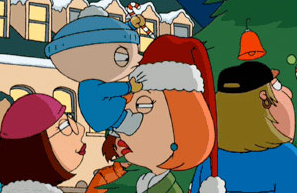
This episode aired back in the first run of Family Guy, when it was one of the more controversial shows on TV thanks to some risque jokes and baby Stewie's persistent desire to kill his mother. The show follows a somewhat traditional Christmas special model, as the family has to deal with a few challenges such as Peter accidentally giving away the family's gifts to charity. There's also a lengthy sequence where Lois takes out her rage on several beloved holiday classics, torching Frosty the Snowman with a makeshift flamethrower and shoving George Bailey off the bridge he's contemplating suicide on.

It's more than a bit of a subversion on holiday specials, of course, what with one of the big surprises in the end involving Stewie getting plutonium on Christmas Day. However, it still has Christmas message as the town tries to convince Lois that the Christmas spirit is a good thing. Even if it does so with Peter explaining that Christmas is a time when we sing carols to lure Zombie Jesus back to sleep. As was explained soon after, sometimes you've just got to have a sense of humor.

Oh, and there's also the special within the special about KISS saving Santa.

8. The X-Files, "How the Ghosts Stole Christmas"


Mulder wants to investigate a supposedly haunted house. Scully thinks there are better ways to spend Christmas Eve. And so we get a Christmas special as only The X-Files can deliver it.

The past X-Files Christmas episode was a two-parter about an orphaned child who turned out to be part Scully DNA and part alien. And though that was nicely acted by Gillian Anderson, this episode gives both actors a chance to shine (and includes Ed Asner and Lily Tomlin to boot). It's one of the few specials that's able to effectively combine something of a horror theme with Christmas, as the two agents try to avoid the clutches of a couple who died in a lover's pact several decades before. It's a little twisted, but the ending of the couple being happy to be together and Mulder and Scully exchanging gifts is pretty nice.

7. The Office, "Christmas Party"


Though I've been enjoying the recent episodes of the American version of The Office, most of the strongest emotional moments were from the first few seasons as it explored the romance between Jim and Pam: a direct take on the romantic tension between Tim and Dawn in the original British version, which chose to end their run with these two characters finally getting together. Jim and Pam have tapered off into the background, but at first their relationship was on par with the original show.


This episode does a good job of exploring all of the characters, while also rolling out a plot that almost feels like an O'Henry story. It involves a Secret Santa office party in which Jim, having picked Pam, gets her a sentimental gift nicely attuned to their friendship. Everything goes awry when the office manager, Michael, gets upset when he gets a handmade oven mitt after exceeding the spending limit by buying an iPod and turns the party into a Yankee Swap to try to get what he feels is a better present. It's funny and heartwarming to see Jim's efforts to get Pam's gift back into her hands, especially when it ends up with arch-nemesis Dwight and when Pam finally chooses to trade the iPod for Jim's gift.

6. The Angry Video Game Nerd and Nostalgia Critic Reviews (tie)


I don't get too many visitors in this corner of the Internet, but I thought it would be best to put these two on equal footing considering their rivalry led to a brutal no-holds beatdown and the destruction of Chicago at the hands of a mutant Donkey Kong-esque Jesus and a super mechanized Jesus. Their revulsion for one another is an act, of course, but there's no need to risk massive Christ devastation.

James Rolfe, aka The Angry Video Game Nerd, has been producing scathing attacks on sub-par video games from the 80s and 90s, while Doug Walker is the Nostalgia Critic, producing weekly reviews of crappy old movies and TV shows. Both are clever, hilarious, and great physical and vocal comedians. Rolfe updates more infrequently then Walker, who got a significant boost from the faux feud with Rolfe and makes a living managing several Internet series at Channel Awesome, but he faithfully puts out a Christmas review each year. The best one might be a take on A Christmas Carol, in which Rolfe tours incarnations of his present, past (home videos of Rolfe getting aggravated at Mario), and future (an elderly Rolfe bitching about a bad Wii game).


Rolfe stays in grouchy character reviewing Christmas-based games, while Walker gets extremely excited about the holiday in what seems to be only partially an act. His keystone is almost exactly what I'm doing, though he had the idea first and I'm just trying to beat him to the punch: reviewing 11 Christmas specials (he likes "to go one step beyond") and saying why he likes them. He did one in 2008, and another one in 2009 taking in the specials that were requested by fans. This year, he's scheduled to do another one mopping up even more specials that fell by the wayside. I put in a request for the "Refrigerator Day" episode of Dinosaurs, because the Polar Express movie, Doug? Seriously?

He's also done other specials, one of which introduced us to the glory that is Santa Christ:


5. Bad Santa


In one of those examples of people complaining about something before they actually saw it, this movie got a little bit of bad press before it was released because people thought it was going to be going out of its way to disparage the holiday as much as it could. If anything, it goes out of its way to inject a bit of a Christmas theme into the story and winds up targeting the culture of malls and consumerism rather than religion.

The plot involves Billy Bob Thornton as an alcoholic con man Willie who, along with a dwarf partner (Tony Cox), pulls off a heist each year by playing a mall Santa and elf in the leadup to Christmas and looting the safe and stores after hours on Christmas Eve. Things go awry when Willie gets mixed up with a lonely kid (Brett Kelly) and finds himself reluctantly being some semblance of a role model for him. Of course, a lot of humor comes from the fact that Willie is rude, lascivious, profane, and altogether unfit to work with children. The script is nicely done, though, focusing on some rather well-constructed jokes rather than cheap gags.


4. Lost, "The Constant"


It's a Christmas show...in February! What? OK, this isn't a Christmas special, per se. It just has a slight Christmas theme, and aired on February 28 of 2008. It's also considered to be one of the best episodes of Lost.

The show didn't exactly offer itself up for a Christmas special, and the fans would have rightfully cried bloody murder if there had been anything even approaching a happy break from the action in which the Others and the smoke monster and Oceanic Flight 815 survivors all got together to hang stockings in the Swan hatch. Still, until the fifth season stomped space and time in the face, the show followed a meticulous count of days from the plane crash in September of 2004 (on the same date as the show's premiere). That meant that by the time this early fourth season episode rolled around, it had reached Christmas Eve.

The story focuses on Desmond, always one of the stronger characters, as he finds his consciousness whipped about between the past and present day. It instills a real sense of danger, as a radio operator on board the freighter Desmond travels to suffers the same malady and it winds up killing him. The interaction between Desmond and the past self of an Oxford physics professor who is now on the island nicely adds to the layers of sci-fi, but the thing that brings this into Christmas territory is Desmond's desperate attempt to patch things up with Penny, the love of his life and ex-girlfriend at the time he keeps flashing back to. The fact that Penny is his "constant," a way of stopping his warps through time, makes her something much more as well: a way to save his life. All of this comes to a head as Desmond uses some hastily repaired and oh-so-briefly functioning communications equipment to call Penny on Christmas Eve, as he promised he would do eight years before.

Embedding is disabled, so enjoy the clip here.

3. Aqua Teen Hunger Force, "Mail Order Bride"


Once again, Aqua Teen Hunger Force proves that Christmas episodes don't have to be heartwarming but can just choose to be inappropriate and hilarious. So don't go and pick out this 11-minute episode to show to young children just because it's a cartoon, but if you want a non-traditional quick viewing option.
The basic plot has Master Shake and Carl sharing the cost to buy a Russian mail order bride as a Christmas gift to themselves. This split brings up obvious problems, and the woman immediately locks herself in Carl's house in terror after realizing she has been purchased by a slovenly pervert and a giant milkshake. We also get Meatwad's finicky wish list, his earnest efforts to make high-end gifts for Frylock out of sticks, and his mistaking some thumping on the roof for Santa getting an early start due to overpopulation.


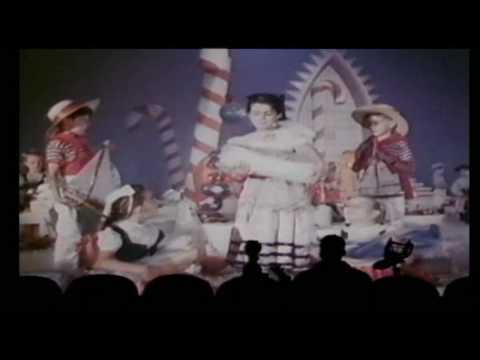
2. Mystery Science Theater 3000, "Santa Claus"


One of only two Christmas specials done in the 10 years of MST3K, this one takes on a truly bizarre movie. It appears that Santa lives in a palatial ice castle in space, keeps a coterie of international children at his beck and call to help him (creepy...), flies about in mechanized reindeer, and does battle with Satan. Yes, Kris Kringle delivering gifts is something that the Lord of Darkness doesn't really like. It's a bounty that's almost more than the boys on the Satellite of Love could hope for.

1. Moral Orel, "Honor"


About half of Moral Orel was a ripping take on holier-than-thou religious types, with episodes typically revolving around the title character's naivete as he misinterpreted lessons from the Bible or other advice and generally wreaked havoc without trying. However, there were a few pretty dark themes underlying the show, namely Orel's closeted, alcoholic father. The ending of the first season (a Christmas episode that, oddly enough, was aired as a sneak peek for the rest of the season) had a rather depressing ending, but it was nothing compared to the third season. Having seen what a horrible person his father really is during a hunting trip, Orel's whole world is turned upside down and the carefree plots of the show were gone, replaced by episodes exploring the repressed nature of Moralton's residents and the slow disintegration of Orel's family.

Naturally, with all of this coming to an end in the series finale, it didn't seem like things were going to end too happily. It was painful to the audience, because Orel's earnest and friendly attitude made him one of the few genuinely likable characters. There's still a heart-wrenching scene in which Orel's father confronts Coach Stopframe in anger over how he has become a role model to his son in a matter of days and, in front of his wife, admits that he loves Stopframe...who rejects him. But a final shot shows Orel regaining what he lost when he realized his father's true nature: a happy family life, as a well-adjusted adult married to his childhood sweetheart with a couple of kids to boot.


Part of the reason for this being a personal favorite is just the way I saw it. The episode aired a week before Christmas in 2008, and I was visiting my parents on my Christmas vacation. Seeing it end on a high note, spending a happy week off with my family, was just a huge boost to my mood.
Thursday, December 16, 2010

Double Feature Review: Fast Food Nation and Joyeux Noel

Fast Food Nation


Synopsis: A critique of the fast food industry presented through the loosely interconnected stories of a marketing executive, a teenage counter girl, and a group of undocumented workers in a meatpacking plant.

The bad news first:
The movie is based on the book of the same name by Eric Schlosser, an investigative journalist who wrote a very well-received account of the cost you actually pay for getting a burger and fries in under five minutes. By transferring it to the screen as a fictional story, however, the whole premise is kind of cheapened. A few of the actors are rather well-known, and Burger King and McDonald's are clearly mentioned while the story focuses on a third, fictional major burger chain (a lame knockoff of McDonald's called Mickey's); it creates more than a bit of a disconnect, which serves to blunt the message of the film.

As a whole, the movie is really only able to focus on a few issues: the exploitation of illegal immigrants in dangerous working conditions, the problems of ensuring the quality of beef, and the challenges facing working youth. Other issues related to the industry, such as environmental effects in South America, are never brought up. The focus on the meatpacking plant workers works pretty well, but it suffers from the same problem as the other storylines: the fact that none of these issues can really be blamed on fast food. Aren't there a lot of industries that exploit undocumented workers? Is getting a steak at a nice restaurant any better or worse than getting a burger that was also churned out of a slaughterhouse? Don't all teens hate their jobs?

Promising hints show up here and there, including a few kitchen workers contemplating whether they'll be the latest in a recent series of holdups and determining that maybe they should rob the restaurant. That would have been a great story to follow...and it never materializes. Several other meandering stories or premises also fall apart before reaching a satisfying conclusion.

Finally, it can be a little wordy (or didactic, as the New York Times nicely puts it). The problem here is that there are plenty of instances when you're well aware of how long people are blathering on about some hot-topic issue. It's well-written and realistic enough, but there are times when it starts to grate. Especially in the bullshit sessions of a college common room, whose scenes are made doubly annoying because some casting director thought Avril Lavigne could act.

The good stuff:
As has been mentioned, the story featuring the illegal Mexican immigrants and their experience in the meatpacking industry is the strongest of the bunch. I'm sure I could go onto a message board right now and find someone screaming right-winger about how illegal immigrants don't deserve sympathy, and some left-winger screaming right back at him, but the movie itself never gets tangled up in the numerous issues surrounding this topic. It just shows what can happen behind closed doors.

For the most part, the actors do a good job. Some scenes are also quite enjoyable to watch, such as the discussions between the girl and her mother and especially the later conversations between the girl and her uncle. And the last scene showing real footage of cows being killed and butchered, though again having the effect of making you question eating meat rather than eating fast food, is about as visceral and effective as it can be.

Verdict:
Here's an idea for when you adapt a book by an investigative journalist: make it a friggin' documentary instead of a fictional movie that tries to be one. It's a little tougher to find an audience, but if you do a good enough job they will come. Consider Super Size Me, an excellent documentary that lambasted fast food in general and McDonald's in particular for contributing to American obesity. It made $30 million. Fast Food Nation made one-fifteenth of that.

Joyeux Noel


Synopsis: Scottish, French, and German soldiers hold an impromptu truce on Christmas Day in 1914.

The bad news first:
There's...really not a whole lot. The Christmas Day truces actually happened, with varying degrees of intensity in the fraternization between soldiers. One negative review I came across whined that the movie should have made it clearer that this happened all alone the Western Front, not just in this one unit; another more positive one said it would seem hokey if it weren't for the fact that it actually happened. If those are the only complaints you can come up with, I'd say you just watched a pretty good movie.

The good stuff:
This is one of the more inspiring stories from World War I, and the movie does it justice. The scene in which the opposing soldiers slowly but surely make friendly gestures across no man's land and finally walk out among the debris and bodies to have a few moments of peace is especially heartwarming. It's equally as painful to watch as they slowly restart the conflict, despite the obvious comradery they form in the short time they spend together.

World War I was one of the most pointless fights in history, if not the most pointless one given the much more malignant bloodshed that followed in Europe 21 years after the armistice. The movie drops a few anvils in pointing out this fact, including an opening showing schoolchildren from the three countries reciting hateful speeches against their enemies and a priest reluctantly giving a sermon about how it's God's will that the Scots soldiers kill the Germans. Even if it's heavy-handed at times, it's a point well worth making. There are also some more subtle moments, such as a German soldier saying he enjoyed the brief peace even though he doesn't celebrate Christmas since he's Jewish. We know that even if he survives the fight to return to Germany, it will only be a matter of years before he's persecuted as an enemy of the state.


Verdict:
You should definitely see it. It even works as a non-traditional sort of Christmas movie.

Monday, December 6, 2010

Greatest Thing of Anything: Planet Earth (the series, though the planet's pretty cool too)

If I lie on the ground, I probably take up about six square feet of space. The planet, meanwhile, takes up some 5.5 quadrillion square feet by the measurement I found. So I'm taking up maybe one 1.1 quadrillionth of the planet's surface area when I sunbathe, and a lot less when I'm on my feet. And this figure seems to be based more on the square footage if Earth were smooth and flat like a globe, not pitted with mountains and hills and caves and crevasses like it actually is. In short, Earth is friggin' big.

And there are four planets much bigger than Earth. The Universe is frickin' HUGE

In terms of globetrotting, I'm sure I haven't whittled down that percentage too much in the places I've been. I've got a few tracks over the United States and Europe, but that's only two continents of six and it excludes the North Pole as well (to the extent that the North Pole continues to exist). Even the most avid travelers have probably only seen a fraction of the planet. Though in some areas, I'm sure you can go to one place and be satisfied that you don't need to visit all that other square footage you can see.

Mm-hmm

I'd certainly like to travel more. I did a semester abroad in England, and before I went my aunt gave me a couple of guidebooks for London and Great Britain (England, Wales, and Scotland) as a whole. Most places in the British Isles sound pretty amazing, but even zeroing in on this little slice of the planet and experiencing all it has to offer would seem to take a minimum of a full lifetime and a massive amount of cash. And then there are all those rainforests, caves, mountains, seas...what is one to do?

Why, get Planet Earth, of course.


Planet Earth is a 2006 BBC documentary, apparently the first documentary filmed in high definition and the most expensive one ever filmed. It's made up of 11 50-minute episodes, each focusing on a specific environment. Deep oceans, shallow seas, mountains, caves...it's really quite amazing the range they decided to take their cameramen. Each episode typically features numerous locations which each common theme, with a focus on both the amazing landscapes and the incredible animals who make them their home. So yes, it's not a full representation of the planet, but I think we can do without a swooping aerial shots of the Los Angeles freeways. There are plenty of criminals and TV helicopters that give us ample opportunity to see them anyway.

Ahhhhh...the wonders of Earth

The footage is so seamless and well-done that you rarely stop to think how they got these majestic shots. The DVD takes care of that by appending every episode with a mini documentary within the documentary, showing just what devotion the teams had. Quite often it seems like they're staking out areas for weeks to get what in the end amounts to only minutes of footage. This includes a guy stalking a bird-of-paradise locale, a team racing to get terrifyingly beautiful shots of leaping sharks, a scuba diver quietly picking up footage of a piranha meal, and an amusing account of a pair of cameramen and their hot-air balloon's attraction for trees.

You've also got the classy, precise narration of David Attenborough. At the time the documentary came out, he'd been working for the BBC for 56 years. His work there has included quite a range of nature documentaries, so Planet Earth is right up his alley. His devotion to the world is apparent, though ironically he's been criticized by some environmentalists for focusing on the idyllic parts of the planet without giving any time to pollution and other problems (for the record, the DVD includes an extra disc of interviews devoted to this subject). As if that weren't enough, the same year the series came out a poll named him Britain's most trusted celebrity. For some reason, the Discovery Channel likes to switch narrators when things come across the pond and had Sigourney Weaver do the narration. I have nothing but respect for Sigourney Weaver, but I thought her expertise was more in the flora and fauna of other worlds.


And finally, footage from the series goes really well with MGMT.