Wednesday, July 28, 2010

Double Feature Review: Boondock Saints II and Inception

Here begins yet another recurring segment, which should remain feasible as long as my "to see" list of movies includes dozens of titles, Netflix keeps getting my money, and rural Maine continues to be boring. I tend to chat with a college friend while watching movies online, and quite a few Friday nights have been spent that way. I guess I could go out and hit the scene, but you know...rural Maine. This segment is quite simple: a two for the price of one movie review where I'll give a quick reaction to some movies I've seen in quick succession, either back to back or within the span of a few days.

The inaugural duo: The Boondock Saints II: All Saints Day, 2009 sequel to cult hit The Boondock Saints, and Inception, the current mind-bending adventure from Christopher Nolan. We'll start with Saturday's entertainment.

The Boondock Saints II


Teaser: The movie came out a decade after the first Boondock Saints, but only eight years have passed when the story begins. The Saints and their father have moved to Ireland to pursue a quiet farming life, but return to Boston when they are framed for the murder of a priest. They pick up a Mexican fighter along the way, as some of our favorite finest from the Boston Police team up with an FBI agent to figure out how to respond to their return.

The bad news first: It takes a solid half-hour for the story to really start. The Boondock Saints ended with the brothers and their father vowing to exterminate crime syndicates in the city and the BPD giving them a little bit of help in their mission. It turns out they can't keep a promise. The final scene marked their final murder, at least until the action starts to pick up. So rather than keeping the Saints in Boston, where a frame-up may well have had more serious consequences, it has to grind its way along with everyone fretting about what will happen when they get to Boston. By comparison, at the half-hour mark of The Boondock Saints we've already gotten quite a bit of character development, a couple of dead Russian mobsters, and the Saints' realization of their cause.

Most of the surviving characters return, but the absence of Willem Dafoe's Paul Smecker is obviously the most noticeable one. Julie Benz plays a protege of his, ie the same character but better-looking in a dress. For some reason, Benz also puts on a Southern accent for the role. I'm sure there are men out there who immediately consider a Southern accent to immediately amplify a woman's sexiness, but it just doesn't seem to fit. Clifton Collins Jr. does a reasonable job with Conner, who the Saints take on as a third member, but the character doesn't seem all that necessary. The first movie made it kind of clear that Daddy Saint was taking the place of the slain Rocco, but due to the stuttering transit issues in the first quarter of the movie the Saints are left with a not-really-necessary vacancy to fill.

Troy Duffy, writer and director of the original movie, returns for the sequel. Unfortunately, he tries to transfer quite a few of the favorite elements from the first film. References to past parts of a series are perfectly OK when done in moderation, but the best sequels take the characters and give them a new situation, resulting in an entirely new story for the audience to love. Boondock Saints II ends up transferring way too many things over, to the point where characters are dredged up from the dead.

The good stuff: After that half-hour plod to get the Saints to Boston and they finally do what they do best, the movie suddenly feels a lot more like the original. A clumsy assassination attempt involving a forklift and a piddling little gun is immediately followed by a hilarious attempt by Detective Greenly (Bob Marley) to do a Smecker-esque forensic investigation with some wholly inadequate music on his iPod. I know I complained about the transfer of too many elements, but the return of the rope in one scene results in a scene which nicely shows the progress the boys are making in vigilantism since their lucky break in a luxurious hotel room.

It's nice to see the relationship between the authorities and the Saints explored a little more. The backstory of the Saints' father is done very well. And I rather enjoyed the ending, and not in a "thank God it's over" kind of way. It pretty much requires a third movie in the series, though. That could easily be a good thing, but it could turn out to be pretty awful as well.

Verdict: It was really flawed, but you can still enjoy it.

And on to Sunday.

Inception


Synopsis: A new technology allows a group of thieves to sneak into the subconscious of people who have been knocked out by roofies or other means in order to steal their ideas. When a client wants to use the technology for "inception" (the planting of an idea) to break up a rival empire, one thief is willing to do it in order to win a return to the United States to see his children. But the memories of his wife and other obstacles threaten not only this goal, but the safety of his fellow mind hackers.

The bad news first: The soundtrack at times competes with the dialogue. Much of the first half of the movie is discussion, and the score seems to be constant even in scenes where it would have been much better for it to quiet down and let the characters talk.

One dream seems just a tad cliche. No, the dreamer doesn't wake up in a high school hallway in his underwear, but the environment is just a little unoriginal. When I saw the trailers for this movie, I thought it gave an excellent sense of anything being possible in a dream through unconventional images like the train barreling down the city street and zero-gravity fights in a hotel hallway. When one trailer informed us that there would be scenes of battles at a remote fortress in the snow, it made me wonder if the dreamer had recently seen The World Is Not Enough or something.

The good: So very much. There's a reason this movie has earned a 9.2 out of 10 average vote out of some 84,000 votes on the Internet Movie Database, ranking it as number three on their list of the top 250 user-rated films.

The trailers have already revealed virtually every action scene in Inception, but they also promised that it would deliver a story with the visuals only serving to complement it. And it does. Christopher Nolan, fresh off the success of The Dark Knight, has written an excellent screenplay with a very original premise. The story is highly complex; the opening scenes immediately start whipping the audience around, revealing a few flashbacks and multi-layered dreams within the opening scene alone, and this structure continues until the end. Yet even when you're in the midst of a dream within a dream within a dream within a dream, you can still trace your way back to reality and know the motivations and reasons for what's going on.

I've seen some mixed reviews about Leonardo DiCaprio's performance, which I'm hoping isn't just continued residual resentment over the Titanic hype 12 years ago. DiCaprio's performance probably won't net him an Oscar nomination, but it kept you caring for the character and his overall situation. Joseph Gordon-Levitt and Ellen Page did quite well in their roles of trying to keep things tethered in some degree of sanity. Michael Caine seems to be quite a big name for a role which comprises some 20 minutes at best, but perhaps that just goes to show that they weren't going to water anything down when it came to the actors.

The visuals are very striking on the big screen and, as I've mentioned, they don't overwhelm you. In fact, I was focused so much on the story that when the train finally did come blasting down the street, it caught me completely by surprise. Even though it was one of the more iconic images in the trailer, I hadn't been waiting impatiently for it to show up.

And finally, there's the last scene. Not to give anything away, but it couldn't have been better.

Verdict: Go see it.

Thursday, July 15, 2010

A Spoilerific Top 10 Lost Characters

On September 22, 2004, Oceanic Flight 815 ostensibly broke apart and crashed on a mysterious island in the South Pacific after an unsuccessful attempt to divert to Fiji. That was also when Lost premiered on ABC, following the adventures of the survivors of said Flight 815. The series concluded on May 23, following six seasons of smoke monsters, polar bears, abandoned scientific research outposts, exploding freighters, time travel, and quite a few back stories. I belatedly got into the series after the first season, fully caught up between the second and third seasons, and was a devotee for the remainder of the series.

"This plane apparently had the most beautiful people in the world on board..."

I browsed the various commentaries after the finale screen and it basically distilled to the idea that the writers and producers et. al. could end the series in one of two ways: wrapping up the various unanswered questions in a nice package or going out on a heartwarming note to let us know what became of all of the characters we've invested in for six years. Almost all of the characters were memorable, and I can think of only three truly hated by fans: Ana-Lucia Cortez, reviled for general cattiness (though well-drawn overall and just a tad sympathetic) and Nikki and Paulo, universally hated for their slipshod insertion into the series...so hated, in fact, that an entire episode was dedicated to their gruesome demise. The Lost team chose the latter option in ending the season. And while it's a little disappointing that so many of the unanswered questions are going to remain that way, the show was heavily character-based and it was nice to see them give a nice send-off to some of the fan favorites.

So here is my personal Top 10 list for Lost characters, posted a bit late as I've been slowly constructing it for awhile now. It has an impressive 40 percent survival rate!

10. Charlie Pace


Dominic Monaghan, hot off three successes in the more minor role of Merry in the three Lord of the Rings movies, provided one of the more recognizable faces in a cast of actors who generally hadn't carved out a major niche in the TV and film industry. His character, Charlie Pace, had something of a sine curve of popularity. He was likable, if a little narcissistic (letting as many people on the island as possible know that he was the bass player for a dissipated Brit-rock band) and overprotective at times with the general flaw of having a heroin addiction. His lowest point came in "Fire and Water," one of the more unpopular episodes, where he started a brush fire and briefly kidnapped a baby in a misguided effort to protect it.

Charlie roared right back into everyone's hearts in the third season, though. He'd solidly overcome his addiction, become good friends with Hurley, and patched things up with Claire. Charlie's death was forecast from the mid-point of the third season, when Desmond warned him that he was going to die on the island one way or the other. The second-to-last episode of the third season is one of the strongest offerings of the show, as Charlie creates a list of the top moments of his life. It's all very sweet, and it's immediately followed by the episode where Charlie dies saving Desmond from harm and conveying the message that the people trying to communicate with the survivors weren't who the survivors thought they were. Of course, it's made all the more painful by the fact that you think he's going to avoid his prophecy right up until the very end.


9. Daniel Faraday


OK, here's a guy who wears a shirt and tie to an island no one understands. One of the unquestionably lovable four-man band who appears on the island after getting transported in by the helicopter, Daniel provides at least a little bit of insight into the space-time quandaries of the island and the question of the island's relationship to the rest of the world. Jeremy Davies does a terrific job playing the polite, eccentric, disgraced Oxford professor. He also has some recognizable roles under his belt, including films like Twister and Saving Private Ryan.

And then he gets shot by his mother while she's pregnant with him. We really, really didn't want that to happen.


8. Hugo "Hurley" Reyes


So there's an episode entitled "Everybody Hates Hugo" and an episode entitled "Everybody Loves Hugo." Granted, the latter is in an alternate universe created as a gateway in the afterlife, but still. It's the former where another character declares, "You're about the only one on this island that everybody loves." Hugo is a friendly, awkward, slightly dim guy who occasionally goes out on some pretty big limbs to try to achieve some nebulous goal to do what's right. One of his subtly heroic moments is buying up every free seat on Ajira Flight 316 to ensure that no more people have to go to the island than necessary; the action pays off when nearly all of the survivors get butchered in some unseen calamity. It's painful to see the how emotionally wracked Hurley gets at the end of the series, but when he's named supreme protector of the island it definitely seems to fit. Kind of a breakthrough role for Jorge Garcia, probably best known before this show for a role as a drug dealer on Curb Your Enthusiasm.

Note: This space was initially supposed to go to Richard Alpert, the non-aging pseudo-leader of the Others. Then I started writing up Charlie's entry and realized that Hurley needed an entry. Sorry, Nestor Carbonell.


7. John Locke

Terry O'Quinn, who played quite a few semi-background characters prior to his role on the show, acts the hell out of John Locke. That said, pre-crash Locke is your regular everyday guy whose life has gone from reasonably happy to rather gloomy. He screws up a relationship, hasn't found his way in life (having settled on a soul-sucking job in the box manufacturing business), arguably has worse daddy issues than chief protagonist Jack Shephard, and suffers from depression before getting a much worse disability when he's shoved out of an apartment window and shatters his spine.

Then you put him on the island and you get this:


A fully mobile, knife-handy badass. Locke quickly came to represent the man of faith who believed that all of the survivors were on the island for a reason. And he was ready to keep them there to fulfill that destiny, using a lot of explosives in the process, even if most of the population would have preferred a rescue boat home. It's a tad selfish, but the faith way kind of won out in the end. Dead is dead on Lost, so it's a testament to O'Quinn's performance that following Locke's death he was kept on in a new role, as the human embodiment of the smoke monster.


6. Frank Lapidus


Frank, played by Jeff Fahey, undergoes a bit of a transition between the fourth and fifth seasons. When we first meet him, he's a scruffy guy with an alcohol problem who flies island-hoppers in the Bahamas. Like the people he ferries aboard his helicopter, he becomes fairly protective of the Oceanic survivors and plays a huge part in their safety. When he returns in the fifth season, he's clean-shaven and plenty reluctant to get involved in the affairs of the island, but still resourceful and willing to lend a helping hand.

So Frank essentially operates as an extension of the transportation, with a better fate than the briefly surviving Oceanic 815 pilot who he was supposed to be. But to recap: he repeatedly flies a chopper through some weird sort of space-time disturbance, successfully lands the whirlybird in the middle of a storm and ditches it with no casualties later on, manages to recover from another temporal event and land Ajira Flight 316 on Hydra Island, and actually gets that plane in the sky again with little more than duct tape and a bit of luck. Sully Sullenberger's got nothing on this guy.


5. Sun-Hwa Kwon


Sun, played by Yunjin Kim, has one of the best character evolutions on the show. Most of her backstory shows that she was rather fearfully subservient to her husband, albeit with a couple of major acts of hidden rebellion like learning English and planning to flee to a new life in the United States. She comes into her own on the island, gaining quite a bit of independence and showing skill with gardening and medicine.

Putting Sun on the list essentially puts on only one half of the love story, with Jin-Soo Kwon making up the other part of the relationship. The fact that she had an affair pre-crash is pretty much set up to show how much she loves Jin, as her on-island pregnancy by him rather than her lover seems to doom her to death yet also makes her happy that the child is Jin's. When she thinks he's died, it spurs her to become a rather scary cutthroat business shark; when she finds he's alive, she wants nothing more than to return to him. They are separated but never forget each other for almost the entirety of the last two seasons, reuniting at last...only to drown together aboard a sinking submarine and leave an orphan back on the mainland. This show doesn't pull any punches, does it?


4. Eko


Eko has what is probably the best backstory in the entire series. After killing a man in his youth to spare his brother the deed, he becomes a ruthless drug lord in Nigeria. His life takes quite a turn when his brother, a priest, is spirited off on a Beechcraft in the middle of a firefight. Eko embraces his new role, taking numerous steps to atone for his sins, but maintains his old manner when needed. Charlie put it best when he said he was disconcerted with the fact that Eko's carved stick containing scripture references had blood on it. Eko's clearly not someone you want to mess with...unless you're a giant smoke monster, in which case you can smash him against trees to your heart's delight.

Some of the Lost character backgrounds were criticized as treading over familiar ground, but Eko's was extremely unique. Adewale Akinnuoye-Agbaje makes him a card-carrying badass, but humanizes him very well in regards to his family and other ways. The Eko-centric episode "The 23rd Psalm," which has Eko discover the remains of his brother in the Beechcraft crashed on his island, might well be the best of the second season.


3. Desmond Hume


Desmond, played by Henry Ian Cusick, first shows up as the caretaker of the hatch, and promptly takes off in an effort to get the hell off the island. He returns in the second season finale with a flashback, at which point we knew he was going to stick around for awhile. He went from being a half-crazed Scot to a member of the island elite, basically saving everyone's life by activating a fail safe when the hatch starts to go to pieces. Desmond is also the character who is the most personally involved with the craziness of the island; among other things, he has an episode-length flashback where he finds himself back in London, transports his consciousness to a past body on a couple of other occasions, and becomes immune to electromagnetism.

And of course there's a love story as well. Desmond's girlfriend Penny Widmore is the daughter of Charles Widmore, a key antagonist, and he wants nothing to do with Des. It's not like that stops the romance, though it does lead to a separation even worse than what Sun and Jin go through. The scene where Desmond calls Penny on cue after several years in silence is the more iconic one, but the YouTube videos of that have disabled embedding. So I'll give you this:


2. Sayid Jarrah


Your archetypal badass with a heart. Sayid's love life was slightly aggravating, as he seemed to fall in love at the drop of a hat, but in terms of kicking ass he was pretty much unrivaled on the show. His impetus for doing so was sometimes just an order from a higher up, but more often as a matter of conscience, especially if it meant protecting his friends. Sayid has to get credit for managing to kill someone with an improperly loaded dishwasher, but his real shining moment comes at the end of the third season:


Naveen Andrews does a great job taking Sayid through not only a couple of pivotal points in his life, but also through a strange process in the last season in which Sayid is drowned, revived, and may or may not be a soulless minion of the smoke monster. He gets a hero's departure, minimizing the worst of an explosive detonation aboard a submarine (as much as something like that can be minimized) by running the bomb to a more remote location of the vessel.

1. Ben Linus

It would pretty much be blasphemy to not name Ben Linus as the top Lost character, and Michael Emerson has the Emmy to prove it. By the time he appears, halfway through the second season, the story has already established that there are "Others" on the island, people who were on the island before the plane crash who have generally hostile intent toward the Oceanic survivors. So when Ben is introduced, we have no idea whether he's one of those guys or simply the hapless member of a failed round-the-world balloon trip like he claims. For several episodes, he's doing such a good job acting the part that we think the Oceanic guys are being a little bit overenthusiastic. Then this happens:



Even after that, it takes a few more episodes to really pin down that Ben isn't who he's claiming to be. A good portion of Ben's life was spent following in his father's footsteps as a janitor for the Dharma Initiative, but he gives his two weeks' notice by committing mass murder with poisonous gas. He sics the smoke monster on mercenaries. He teleports to the middle of the Sahara Desert. Ben's motivations are so shadowy and his actions so horrifying that it's really never possible to trust him, though from the fourth season on the Oceanic characters are basically forced to accept his help and try to make sense of their current situation. It's nice to see his character wrap up on a positive note, establishing that he was all about protecting the island and its non-evil guardian even if his actions weren't always pure. He not only has the cajones to be a mole in the smoke monster's camp, but he stays on as an Alpert-like assistant to Hurley's career as island guardian. Ben's story is so rich and convoluted that it would probably take a complete re-watching of the series to take it all in, not that that would be a bad thing.

So maybe a Top 10 isn't inclusive enough. Jack could probably get some credit for, you know, saving the world and all...Juliet has an excellent backstory and turns out to be a well-layered character...Sawyer was always fun, even when he was something of a bastard...and so on. But those are my choices for the top tier.

Monday, July 5, 2010

Some brief thoughts on patriotism

Today's the day quite a few Americans, myself included, get to observe the Independence Day holiday and get paid to do nothing all day even though the Declaration of Independence was signed 244 years ago yesterday. I spent the first part of the day in the arguably un-American pursuit of research of a minor scandal involving a Nixon aide for The Downfall Dictionary, then stopped in for a quick visit at the neighborhood bookstore. This was one of the volumes on display:

The one I saw had an endorsement from Glenn Beck. It gives you pause either way.

I'm not sure how accurate the book is, though hopefully they at least know that while Columbus opened the wave of European exploration of the American continents, the origins of the United States as a country lie more in Roanoke Island, Jamestown, and Plymouth. The book alleges that American history has focused on the more negative aspects of the nation, such as racism and slavery and labor disputes and all the rest. The reader reviews run the usual political line with several five-star raves and a good deal of one-star rants, with those in the middle probably making up the more level-headed folks who take in the good and bad parts of the book. And those reviews at least suggest that the book isn't ignoring the bad aspects of American history, and gives something of a comprehensive if right-leaning perspective.

The patriotism people tout today seems to take on the annoying habit of screaming about why The Other Side is unpatriotic rather than saying what they like about the country. The rhetoric can be attributed to the fringe elements on both sides. Conservatives generally characterize liberals as a group of welfare queens, potheads, and weak-kneed pacifists and tree huggers. Liberals can play too, and denounce conservatives as a clan of idiotic rabblerousers, white trash, narcissistic plutocrats, and violent jerks.

The element of truth in both of them is that there are those people on both sides, and they're probably the ones doing the loudest shouting about what patriotism is. For example, Sarah Vowell is a well-versed essayist with a leftist bent which usually goes along well with her more scholarly work, but not all the time. It kind of rankles in The Wordy Shipmates when she makes a jab about how the Puritan vision of America as a "shining beacon on a hill" has been realized through the bright lights of sleep-deprivation methods used against enemy detainees. Which isn't to say most people playing with a full deck shouldn't be irritated when Fox News pundit Sean Hannity gushes about how the United States is the "greatest, best country God has given man on the face of the earth." It's like listening to a closeted man assure himself that tits are just the bee's knees.

Not to give tits a bad name, of course.

Taking the whole "My country right or wrong/love it or leave it" attitude is completely irresponsible, as it basically makes such purveyors live in a happy little bubble of eagles and apple pie. Shrilly shrieking about everything wrong with the country also isn't a very productive way to reach a consensus.

So what's left? I'd like to think we like the country because it's home, because while the ideologues and DMV lines and hundreds of other things can get on our nerves, there's always the friends and family and getaway spots that make it all worthwhile. Love is healthy, and love for country can be a very good thing. As long as it's not trying to equate country with one's own political mindset, because demanding a populace to conform to a single view as a requirement for patriotism is one of those things that truly goes against the American ideal.

The Google Images results for Happy Fifth of July are surprisingly bikini-heavy. So maybe there's more of a patriotism-breasts connection than I anticipated.

Thursday, June 24, 2010

God's Mistakes: the Nazi Hornet

When it comes to religion, I subscribe to a savage mixture of agnostic/deist/Universalist/United Church of Christ ideas. That is, I believe spirituality can play an important role in one's life, and the questions of a grand Creator are quite compelling when it comes to how the Universe exploded out of nothingness and where we go when we die and such, and some of the lessons of Jesus Christ and other figures in the Bible can be quite relevant to the way someone leads their own life. It also means that I don't believe that an Almighty God would be terribly concerned with the sex lives of six billion inhabitants on one tiny planet in the vast cosmos, or that He wants you to burn any Harry Potter book you can get ahold of, or that he shot down the space shuttle Columbia for daring to brush up against his outer veranda.

Whether the creation of life on earth was by a deity or a chance meeting of elements and electricity, the idea of infallibility in such works seems unlikely. I think I remember a Bible chapter in which God was on the verge of destroying humanity out of annoyance, and then there was that whole story with the ark where he nearly did wipe the slate clean. Doesn't sound like the work of someone who made perfect decisions the first time around.

Per Gary Larson, "God as a kid tries to make a chicken in his room"

Humans have been something of a mixed bag. There have been great men and women who advance knowledge and art and are generally major boons to the species, and then there are the sociopaths who spend most of their lives hooked up to the penal system after gunning down innocent victims. Some species out there...well, they may be a part of the planet's delicate ecosystem somehow, but we've already lost the dodo and passenger pigeon and several other creatures, and the rest of us are all still cranking along. So here are some I'm theorizing may have been a mistake, and if you're a mad scientist who can make some sort of ray to get rid of them, be my guest.

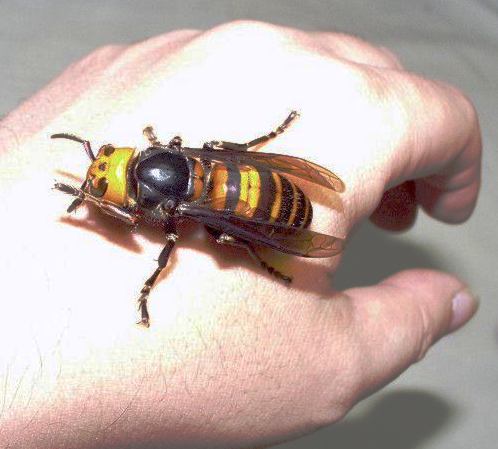
This entry looks at the Vespa mandarinia, or Asian giant hornet.

HOLY SHIT

Hornets are a subgroup of wasps, and though I've never been a fan of the lot of them I think I can safely say that the Asian giant hornet is the worst of the bunch. It's painful enough when a European hornet decides to jab a stinger into you, but these beasts apparently have the muscle and stinger length to put some real hurt on. The common description of the feeling, given by a Japanese entomologist, is that it's like a hot nail being driven into your body. As if that isn't enough, the hornet has a higher-than-normal concentration of the pain-stimulating neurotransmitter acetylcholine, other chemical weapons powerful enough to dissolve human flesh, and of course the lack of a barb for limitless stinging capability. This little jerk is concentrated in the western regions of Asia, where it apparently accounts for more human deaths by animal in Japan than any of the other fauna there. Unfortunately, it has also found Europe to its liking as well in recent years.

If it looks like you should be fighting it in a video game, that's generally not a good sign.

So far, it's a terrifying thing of hurt, but that can apply to a lot of creatures. If we leave it alone it will at least use those giant-looking mandibles to cut down on voracious farm pests or the mosquitoes that spread disease, right?


Oh.

Yes it turns out that the Asian giant hornet has a liking for honeybees and like to swoop in and eradicate hives like they're the helicopter gunships in Avatar or something. It's pretty much a full-on genocide, an unfair fight where they brutally slaughter thousands of bees in minutes. All those nice bees that pollinate flowers and produce honey and the like, gone. The hornets then proceed to rob the hive of all of its valuable resources, including the larvae. They can't digest solid protein, so what happens next, according to Wikipedia, is that they "chew them into a paste and feed them to their larvae. The larvae produce a clear liquid, vespa amino acid mixture, which the adults consume." Which means the hornets gnash infant bees to death with mandibles still bearing the decapitated remains of the larva's parents. And then feed it to their own children only to steal from them as well.

There's that saying, "Karma is a bitch." And there may or may not be the saying, "Burning to death is not the way you want to go." Let's watch the next video.


Assuming there's a whole good vs. evil balance going on in the cosmos, this means that the proportional response for the hornets' crimes is that if they enter the beehive when it's not their day, they're going to get slowly and inexorably burned to death, and/or suffocated. How the bees figured out that this could work, hurting the hornet but not them, is another fascinating aspect of nature.

The Asian giant hornet, ladies and gentlemen. It commits mass murder against a more productive insect, painfully destroys infant versions of that insect, might kill you or me (or at least give one bastard of a sting), looks creepy as hell, and seems to contribute absolutely nothing to the planet. I think this one definitely slipped past the quality control department.

Saturday, June 12, 2010

The Top 5 Most (and Least) Hated States

It's not like there's a patriotism meter in the United States to track just how much the approximately 300 million citizens of this country love the homeland. If there was a meter, it probably got a little wonky when patriotism became equated with support for the President, and that definition seems to have fallen out of favor now that the nice Texan has left the White House. The U.S. has always had a federal vs. state thing going, though, and patriotism seems to break down along the same lines.

People might love their country, but they hate the state next door. Ohio and Michigan despise each other because of a football rivalry, and as a Maine resident I know there are plenty of people who think Massachusetts is a few steps shy of Stalin's Russia. Stephen King probably said it best in The Stand, when the residents of Ogunquit hold an emergency town meeting in the midst of a superflu decimating the planet. They vote not to expel the residents who are already sick, at which point someone suggests that the sick out-of-staters might be kicked out. And that's followed by angry vacationers saying how their business has helped to buoy up the Maine economy. Having been to countless town meetings here, I can fully believe that such arguments would happen here if such a pandemic happened.

Generalizing an entire state population isn't really the best thing to do. Still, plenty of people dislike their state or some other one enough to express their hatred online for all to see. I wanted to do a more comprehensive look at phrases, such as "[state] sucks," "fuck [state]," and "screw [state]," but that would take quite a bit of time and omits numerous phrases such as "[state] is displeasing to me," "I would rather hang from my earlobes than go to [state]," and "[state] has no redeeming qualities and we should tear it out of the country and throw it into the Gulf of Mexico to stop up the oil leak."

So I went with a simple tally of "I hate [state]" results on Google. And here are the states that have earned the most hate.

5. Arizona: 281,000 hits

"With this legislation, I shall make Arizona the fifth most hated state in the nation!"

Before Governor Jan Brewer signed a tough immigration bill into law in April, Arizona may have been in the comfortable middle range of hated states. Even with the bill, the home state of the Grand Canyon edges out Kansas, best known for conservative politics and their continued tolerance of super-bigot Fred Phelps and his clan. Now, with opponents charging that Arizona has given the thumbs-up to racial profiling, the second result for "I hate Arizona" is a Facebook group for "I hate Arizona's legalized profiling law." This only has 59 fans, but other sites reference the immigration law as well.

Other complaints: the heat, mostly, as well as other aspects of the weather, drivers, rattlesnakes, expensive candy, the Cardinals, and a lack of things to do.

4. New York: 334,000 hits

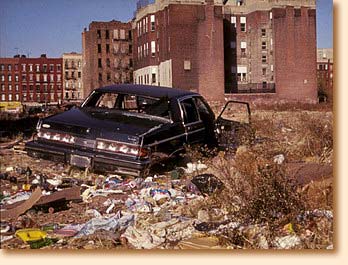
Not post-apocalyptic New York City

Some of this count no doubt comes from the inversion of the "I love New York" merchandise you can find in the Big Apple. And a lot of this hatred probably comes from bad experiences in the city rather than upstate New York. The city has a major cultural scene, it's a huge financial hub, and millions call it their home.

But there's quite a laundry list of reasons people don't like it, too. The pollution, street musicians, beggars, the number of people, the attitude of the people toward non-New Yorkers and other, rent prices and other expenses, crime, and the Yankees.

Not 3. Illinois: 564,000 hits

The reason Illinois has such a big count is this:


Everyone hates Nazis, so I did an advanced search removing them from the equation. Granted, this cuts down on any of the people who are actually complaining about any of the Nazi organizations in Illinois, or any of the whiners who have resorted to Godwin's Law in their issues with the state. But the adjusted result puts Illinois at 140,000 hits, or number 15 on the list of most hated states.

3. Kentucky: 751,000 hits

Even the dogs hate it.
It seems like the Bluegrass State is disproportionately high because of a sports rivalry. The Kentucky Wildcats of the University of Kentucky in Lexington have a major feud with the Louisville Cardinals of the University of Louisville in that city. Both are in Kentucky, which means the residents are quite the self-hating bunch. But it's easier to say "I hate Kentucky" or "Kentucky sucks" if you're a Louisville fan.

There are some complaints about the state rather than the university, though. They're the usual run of gripes: the attitude of the residents, deteriorating infrastructure, road rage, and the people who just plain don't like bluegrass music.

2. North Carolina: 882,000 hits

I would have thought South Carolina would be more hated. Considering the political divide, and the fact that South Carolina has pretty much been the headquarters of conservatism since the Civil War with the latest incident involving a jerkass senator calling both his Republican primary rival and the President "ragheads."

The Daily Show With Jon StewartMon - Thurs 11p / 10c
Thank You, South Carolina - The Race to Replace Disgrace
www.thedailyshow.com
Daily Show Full EpisodesPolitical HumorTea Party


But no, South Carolina garners only 52,900 hits and comes in 31st overall. North Carolina is another self-hating state thanks to sports. The University of North Carolina has a rivalry going with Duke University, and both are in the state but one faction hates Duke while the other hates "North Carolina." It looks like unpredictable weather, the fact that you have to take a side in the basketball war, and drivers make up some of the other issues boosting this count.

1. Nevada: 1,670,000 hits

Really? I never would have expected this. That count is just about a million shy of the population of the state itself. As far as I know, all that's there is Las Vegas, Area 51, and a wide array of nuclear bomb craters. What, are people upset that Nevada gave the presidency to Matt Santos in the fictional election in The West Wing?

Ooh, that durn Mexifornian'll never be MY President!

It seems that relative lack of things to do is what has led people to put Nevada down on the Internet, though. Some commentators say that they despise the state even if they like the people and other aspects of their lives, since it's so hot and dusty and dry. Some of these phrases come from MySpace drama queens who probably hate carrots with as much furor, though. The police make a few appearances as well, and complaints about video games featuring Nevada levels also add to the count.


So what are the least hated locales in the United States?

5. Washington State: 20,700 hits


I expected that Washington might show a false result by the amount of people complaining about the nation's capital. Instead, it came up with this modest figure. I've never been to the state, but it seems like it's got quite a bit of natural beauty in the Cascade Mountains and other areas, plus a terrific city in Seattle.

The complaints that do emerge are the usual fare: drivers and the weather. There are also a few complaints about the state and local government, but doesn't that happen everywhere?

4. New Mexico: 18,600 hits


Awe-inspiring landscapes and UFO crash sites. What's not to love?

Well, the first result is a blogger mildly chastising the state for providing a new home for her best friend, since she wants to be closer to her. And a bit of weather and stuff-to-do complaints show up before Google says the results are pretty much spent.

3. New Hampshire: 17,600 hits

It's always amusing to drive through New Hampshire and see the signs beckoning visitors for cheap booze and cigarettes, plus legal fireworks. It's like all of the fun stuff concentrated in the not-quite-center of New England. The state has a couple of nice little cities, plus the natural splendor of the White Mountains.

One blogger hated it enough to start a seven-part series on his feelings, with the first part looking at winter and black flies. Other complaints generally fall along the same lines before Google runs out of results.

2. North Dakota: 16,200 hits


I'm starting to think North Dakota is something of a national secret. The last I saw, the unemployment rate was next to nothing, and of course you get this rather favorable feedback. It's like a clubhouse that tries to pass itself off as lame to keep outsiders out. Those who do have grievances with the state say there's never-ending winter and nothing to do. I'm sure if they moved to Nevada they'd be fine.

1. Rhode Island: 11,500 hits


Rhode Island is the smallest state, so you really shouldn't pick on it. Plus it's got a nice-looking city and a lot of culture crammed into that modest acreage. Those who don't like it have the same old song and dance: weather, drivers, and stuff to do.


Interested in where your state ranked? Here they are!

Nevada: 1,670,000
North Carolina: 882,000
Kentucky: 751,000
New York: 334,000
Arizona: 281,000
Kansas: 276,000
Alabama: 258,000
Tennessee: 219,000
Indiana: 188,000
Georgia: 176,000
Minnesota: 162,000
Oklahoma: 157,000
Virginia: 156,000
Iowa: 150,000
Illinois: 140,000 (adjusted)
Texas: 133,000
Florida: 130,000
Oregon: 125,000
New Jersey: 116,000
Wisconsin: 109,000
Colorado: 105,000
California: 97,600
Ohio: 97,200
Maryland: 94,600
Missouri: 91,900
Michigan: 86,500
Nebraska: 80,800
Connecticut: 60,500
Louisiana: 53,300
Alaska: 53,000
South Carolina: 52,900
Hawaii: 50,400
Arkansas: 48,600
West Virginia: 44,900
Massachusetts: 44,500
Pennsylvania: 43,300
Idaho: 42,000
Maine: 41,900
Vermont: 39,200
Mississippi: 39,100
Montana: 31,500
Utah: 26,800
South Dakota: 23,300
Delaware: 22,000
Wyoming: 21,600
Washington: 20,700
New Mexico: 18,600
New Hampshire: 17,600
North Dakota: 16,200
Rhode Island: 11,500

Coming eventually: A most/least loved list.

Saturday, May 29, 2010

Internet Killed the Everything Star

Once upon a time, there was a video parody of "Video Killed the Radio Star," the song by The Buggles that was the first music video MTV featured in the wee hours of an August morn in 1981. In that context, The Buggles are kind of assholes, since they're bragging that they're going to kill a particular form of media. Not to worry, radio is still kicking and MTV's quality imploded like a collapsing star after ditching music videos in favor of a hodgepodge of "edgy" shows and dynamiting a number of quality animated series (Clone High and Undergrads among them) to protect the suckiness. And then there was this:


I remember seeing this video back when Shockwave was a cool new Web application offering various animated videos and online games. It apparently hasn't changed too much, but this video is already dated. The Internet services are offered through CD-ROMs? And they include Compuserve? And there's still reason to include a Netscape logo in the mix?

My relationship with the Internet is probably about the same as what I have with gasoline: I realize it has a lot of negative effects, but I friggin' need it. I work at a newspaper, and hear plenty of jokes and dire stories about how the Internet is gleefully killing us and everything else on the planet. At the same time, I spend plenty of time online checking out various websites or Netflix. The resources available online are pretty much the only thing that lets me keep up my other website by doing research in news archives and books whenever I want. And if I, say, wanted to see Summer Glau, let's see how different the paths are between whether I have Internet and whether I don't. Ready? Go!

Internet Me does a quick search on Google Images. And for good measure, I carry it through to this blog with a few keystrokes.

So the Internet has this going for it. Which is nice.

Meanwhile, Non-Internet Me is trying to catch a repeat of The Sarah Connor Chronicles, or seeing if some magazines might have a shot available. Or I could be taking a cross-country road trip to Hollywood complete with hilarious pratfalls to see the lovely Ms. Glau in person...whereupon I would most likely get mace-Tased right away by her personal security or crushed by her powerful robot arms.

So how much harm or good is the Internet causing in various areas? Let's find out together.

The Video Star, ie Music Videos

I'll always have a special liking for the alternative rock songs that appeared in the late 1990s, since that was generally a good time for music and also the time I discovered WEQX. The music videos of the time weren't really special, but I do remember a few of them. They include Oasis playing with a bunch of military helicopters in an industrial ruin, Radiohead's incredibly weird animated video featuring a limbless EU delegate and other such oddities, and the front man of The Verve plowing a straight line walk through a busy London street. Those are all British bands, I realize. So be it.

I've already mentioned how MTV has pretty much ruined itself, so I won't dwell on that. Strangely enough, music videos have grown more popular since people have stopped watching them on television. It makes sense, really. More people use the Internet than watch MTV or VH1, and the bands apparently realize that if something becomes a viral hit they'll receive much more exposure than they might otherwise get. To that end, music videos have become incredibly awesome. They include the Flobots' animated dystopian future, Depeche Mode's short movie featuring a sort of hostage situation with a man in an out-of-control car, and Mutemath lip-syncing their song in reverse to terrific effect. OK Go are the undisputed kings of the new video scene, having put out amazing videos featuring a backyard choreographed dance, a seamless routine on treadmills, and the best Rube Goldberg machine ever made.

So kudos to the Internet on this one. MTV can keep their crummy reality shows if it means music videos are consistently entertaining now.

Record Stores, CDs, and Radio

There are still a few record stores around, and some chains seem to be doing fairly well (see Turn It Up in New England and Cheapo in the Midwest). And I wish them well, because they both have a nice atmosphere and, well, a ton of CDs. Though I have to confess that I haven't bought any discs in quite some time. I don't have an iPod, so it has more to do with listening to the radio and saving any song I really like as a favorite in YouTube. That and the fact that I'm kind of cheap. Illegal song downloads have been around since the Internet was fast enough to sustain them, but it hasn't destroyed the music scene. By having music be available mostly online or through iTunes, though, it seems like CDs and the stores that sell them might be on the way out. Guess it's time to welcome a vacancy in the mall for a little while before letting another Starbucks move in.

Radio, I'm hoping, will endure. It's possible to play tunes off the iPod in vehicles, but it certainly seems unfair to require someone to pour thousands of dollars into a car and then demand that they go out and buy an iPod to fill with their desired songs and podcasts. So cars will always have stereo systems included in them, and hopefully radios will be a part of that. Plenty of radio stations are chock full of good music with minimal commercials and some pretty good DJs to boot. And then there are all of those concert giveaways and tornado warnings that radio brings you.

Guess they don't make a podcast for that.

Movies and Video Stores

One can pick up an illegal movie download as soon as a movie premieres, if not sooner. But that really can't compare to dropping some money every now and then to hit the theater and see something on the big screen. Not everything needs to be blown up to massive proportions with a nice sound system to get the full effect, though, and I do watch online movies on Hulu or Netflix in smaller windows. So any decline in movie revenues can be attributed to people holding onto their cash to put toward more essential needs or people deciding they don't want to see dreck like Furry Vengeance.

Dear fucking Christ

The Internet can't really be blamed for the gradual decline of video stores, either. The very fact that they're still called video stores when VHS has pretty much disappeared from the market isn't a good sign. And ironically enough, the true threat to them is Netflix and other mail-in services, which utilize the post office, which the Internet also threatens to some degree. It's much easier to have a DVD mailed directly to your house, or stream it online, than make a trip to a video store and face late fees. Though if the Internet kills the post office, you can never get movies ever again. Except bootlegs or a more extensive online stream network, which can be ported directly to your television. Dammit.

Television

It's pretty much the same thing as movies. It's not like commercials weren't already interludes that let you get a snack or take a bathroom break, but TiVo has taken things to the logical conclusion by letting you skip them altogether. Hulu and other streaming sites offer pretty much the same perk: wait a day, miss the water cooler talk, and watch your show with only a scattering of 30-second ads. Of course, these ads can repeat themselves ad nauseum.

Overall verdict: television has had a few golden ages, and though it seems to have progressed from a "stupid reality shows" phase to an "endless cop shows" phase, there are plenty of terrific dramas and comedies out there and the Internet is probably helping them more than hurting them. It was pretty much the entire reason for the writer's strike back in 2007-2008, after all. All told, the Internet is much less threatening to television than the team that makes creative decisions at Fox.

Canceling this, and Arrested Development, and Greg the Bunny, and so on = Rupert Murdoch is going to the special hell

Video Games

Online games are about as graphically advanced as the old Playstation games. The real issue lies in their addictiveness. XKCD already said it very well:


Newspapers and Journalism

So here's my plan: I'm going to bury my head in the sand and ignore any and all bad news I hear related to newspapers.

A terrible strategy, I know, but I'm currently stuck in a situation which is neither dire nor ideal and I'm sure that's how the newspaper industry can be described as a whole. For all the jokes about every newspaper and magazine in the country fading into nothingness in a matter of months, they are still looked upon as a trusted source of local news (and national news, though there are plenty of people who criticize those as "liberal media" while implicitly trusting anything on Fox News). A newspaper subscription is cheaper than an Internet package, but of course a newspaper doesn't come with access to anything and everything ever produced. And those of us who grew up reading the funnies have realized that most of the comics now are bloated relics kept trundling along by an original artist's offspring while the stuff that makes you laugh has migrated online, where amusing people with some degree of artistic skill can reach a wider audience.

So newspapers are in trouble. They apparently can't afford to keep teams like Woodward and Bernstein focused on important stories, and the people who get fired are more likely to be the experienced reporters at a higher pay grade than the cubs who aren't paid much. At the same time, there's always a demand for news, and there seems to be a corresponding demand for accountability. Newspapers might convert into an online product or something like the version of the Minority Report version of the USA Today that morphs to incorporate breaking news, but it seems like there will always be a place for journalism. As long as journalism in general doesn't go off the rails into completely editorial territory.

If that thing leaves the island, that's it. It's over. Everything.

The post office

Which is easier: typing dozens of words per minute in an "electronic mail" that can be quickly and instantly sent to someone, or carefully scrawling out a letter and envelope, spending forty-some-odd cents to send it on its way, and getting it to the mailbox or post office where it will proceed to a destination within a few days.

For idle conversation and other routine correspondence, e-mail is ridiculously convenient. And with companies everywhere urging people to go paperless, will there come a time when the mail system simply collapses for lack of anything to distribute other than glossy junk mail? Well, hopefully not. Sending out cards for someone's birthday or other special events should be firmly in place. I don't think sympathy e-cards where a cartoon duck consoles you the loss of a loved one will catch on. And then there's always Netflix. Sweet savior of the postal system, Netflix!

Books and bookstores

And perhaps Giles on Buffy the Vampire Slayer said it best for this one: "Smell is the most powerful trigger to the memory there is. A certain flower, or a-a whiff of smoke can bring up experiences long forgotten. Books smell musty and-and-and rich. The knowledge gained from a computer is a - it, uh, it has no-no texture, no-no context. It's-it's there and then it's gone. If it's to last, then-then the getting of knowledge should be, uh, tangible, it should be, um, smelly."

Apparently books are doing fine, even if they're being printed on paper and that's dying out and allowing trees to grow back and cure the planet of all its ills. Granted, most paperbacks published in North America are romance novels. Tell me, does the strapping guy with the pecs the size of Ohio get the fair maiden? Spare me the suspense! Still, there's something about relaxing in bed or a favorite chair with a good book. We're not at the point where everything had to be on the screen, are we?

Compact discs? How primitive the Martian libraries of the year 3000 are.

Language and grammar

Perhaps the biggest drawback of the Internet is that some idle browsing can inculcate the idea that the human race has gotten stupider since we can hide behind a pseudonym and post messages that look like the ramblings of a drunken 10-year-old. Some people probably post these things to be ironic, but, as Jon Stewart would say, YOU'RE NOT HELPING. Text messages have certainly helped in diluting words to as few letters as can be managed, and then of course Twitter came along. Have a thought? Please be sure to condense it into 140 characters or less, and use the number sign to join thousands of other people in commenting on some current event, or the @ symbol to try to get the attention of celebrities. Oh, if only William Faulkner were alive to take part in it!

I probably shouldn't be so crotchety. For the most part, the Internet is well-versed and coherent, with scholarly articles and widespread collections and a plethora of random sites like this one with the occasional (hopefully forgivable) lapses in spelling or grammar. Still, I'm unclear how a funny cat video can devolve into a debate over whether or not America sucks. And though hilarious, there's always PeopleofWalMart.com and Lamebook (aka, "White Trash Gets A Facebook Account) to make us question the human race.

But I guess I can't really take too intellectual of a stance here considering the section I'm going out on.

Porn

"So you're looking for pornography, are you?" asks the kind Internet Merchant. "Well, I guess I can help you out. I've got a couple of billion images if you care to browse. About the same number of videos, too. It's all free, of course. And you can surf it all from the privacy of your own home instead of going into some sketchy shop or trying to buy a dirty magazine from some store clerk while waiting in line right in front of a Catholic grandmother getting Flintstones tablets for her three grandchildren. Is that all right with you?"

He's quite nice, this Internet Merchant.

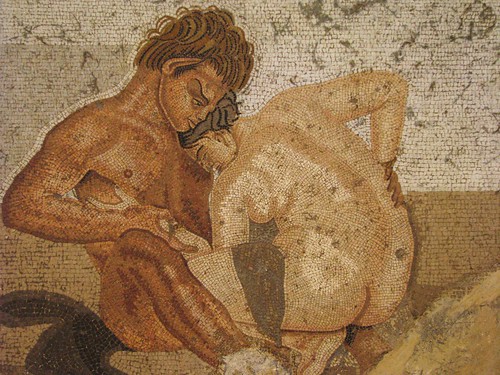
You know what? Porn is like the cockroaches after a nuclear blast. It'll always be around, because it's a constantly changing thing. If the Romans took the time to make pornographic pictures out of hundreds of pieces of colored tile, I imagine pornography will always be riding in the wave of new technology like a top-notch surfer. Perhaps newspapers could learn a thing or two from it.

I'll be in my bunk.

Saturday, May 8, 2010

I Make Fun of State Quarters: Bears Took Over Alaska

By one depiction, Alaska is a black hole of civilization (even if there's a few months where the sun never goes down, but then again light gets sucked into a black hole). By this logic, those guys who came up with the term "Seward's Folly" to describe the decision of Lincoln's Secretary of State to by an enormous chunk of land from Russia on the cheap were right. Not so much because they thought it would be a "hostage territory" vulnerable to foreign invasion (though the Japanese still fought pretty damn hard for a few fragments of the Aleutians during World War II) but because $7.2 million seemed like a lot of money for a desolate swath of tundra and ice. So from the scattered reports that have escaped from the wasteland, it appears Alaska is critically short on women, locked in a losing war with the fearsome moose, packed with kooky politicians who think the Internet is made of tubes and Democrats are embarking on a mission of pulling the plug on old people, and uncomfortably mixing a reliance on alcohol with the greatest ratio of pilot's licenses in the nation.

The other interpretation is that Alaska is a terrific place with some of the best natural beauty in the country. Seward's purchase gave the nation a new tallest mountain, as well as a plethora of amazing forests and rivers and wildlife. And residents came up with the crazy-but-fun-sounding ideas of an epic sled dog race and a bloodying scramble up the shale-littered slope of a mountain. Not to mention all that oil and timber that comes out of the deal.

So grinding all of those traits in a blender yields this:


"And the number one threat to America..."

Alaska was one of the last states to enter the Union and, correspondingly, one of the last states to get a quarter in the program. Designed by Charles Vickers and released on August 23, 2008, the quarter quite simply depicts a huge friggin' grizzly bear snagging a salmon from an isolated river. The only other features to point out are the inscription "The Great Land" (referencing the fact that Alaska could crush much of the continental U.S. if dropped on it) and the North Star, hidden off to the side of "1959" and likely a reference to the magnetic colorstorms that are nicely visible in the state.

There might be some hidden references to other aspects of Alaskan life here, such as the hint of a tree on the shore referencing forestry and/or the natural beauty of the state. And the fact that bears have either massacred all of the residents and taken over the state, or at least ousted all human fishermen and monopolized the salmon market.


They took our jobs! But they're so cute...

It's a little tough to take on the Alaska state quarter. While searching around, I discovered that the crew over at Rifftrax deemed it the most awesome state quarter of the whole bunch. This duo made up the meat of Mystery Science Theater 3000, and in their final showdown they gave Alaska the coveted title over Wisconsin, despite their strong ties to the state from childhood and university studies. It would be a little difficult to match these wits in a battle to mock state quarters, so I'll just sum up that they felt the Alaska quarter was legitimately awesome while the cheese and cow of the Wisconsin quarter were only awesome in an ironic way.

And then there's this:

Governor Palin unveils Alaska's two-bit competitor of the AK-47

With the release of quarters once again corresponding to important events, the Alaska quarter went into circulation only six days before John McCain announced that Sarah Palin would be his running mate in the 2008 presidential election. And if you didn't like the bear design, you can at least be glad that the schedule wasn't tweaked to have the quarter released a year later. If that was the case, the GOP probably would have clamored to have Palin smiling beneath the banner reading, "You betcha!"