Saturday, June 12, 2010

The Top 5 Most (and Least) Hated States

It's not like there's a patriotism meter in the United States to track just how much the approximately 300 million citizens of this country love the homeland. If there was a meter, it probably got a little wonky when patriotism became equated with support for the President, and that definition seems to have fallen out of favor now that the nice Texan has left the White House. The U.S. has always had a federal vs. state thing going, though, and patriotism seems to break down along the same lines.

People might love their country, but they hate the state next door. Ohio and Michigan despise each other because of a football rivalry, and as a Maine resident I know there are plenty of people who think Massachusetts is a few steps shy of Stalin's Russia. Stephen King probably said it best in The Stand, when the residents of Ogunquit hold an emergency town meeting in the midst of a superflu decimating the planet. They vote not to expel the residents who are already sick, at which point someone suggests that the sick out-of-staters might be kicked out. And that's followed by angry vacationers saying how their business has helped to buoy up the Maine economy. Having been to countless town meetings here, I can fully believe that such arguments would happen here if such a pandemic happened.

Generalizing an entire state population isn't really the best thing to do. Still, plenty of people dislike their state or some other one enough to express their hatred online for all to see. I wanted to do a more comprehensive look at phrases, such as "[state] sucks," "fuck [state]," and "screw [state]," but that would take quite a bit of time and omits numerous phrases such as "[state] is displeasing to me," "I would rather hang from my earlobes than go to [state]," and "[state] has no redeeming qualities and we should tear it out of the country and throw it into the Gulf of Mexico to stop up the oil leak."

So I went with a simple tally of "I hate [state]" results on Google. And here are the states that have earned the most hate.

5. Arizona: 281,000 hits

"With this legislation, I shall make Arizona the fifth most hated state in the nation!"

Before Governor Jan Brewer signed a tough immigration bill into law in April, Arizona may have been in the comfortable middle range of hated states. Even with the bill, the home state of the Grand Canyon edges out Kansas, best known for conservative politics and their continued tolerance of super-bigot Fred Phelps and his clan. Now, with opponents charging that Arizona has given the thumbs-up to racial profiling, the second result for "I hate Arizona" is a Facebook group for "I hate Arizona's legalized profiling law." This only has 59 fans, but other sites reference the immigration law as well.

Other complaints: the heat, mostly, as well as other aspects of the weather, drivers, rattlesnakes, expensive candy, the Cardinals, and a lack of things to do.

4. New York: 334,000 hits
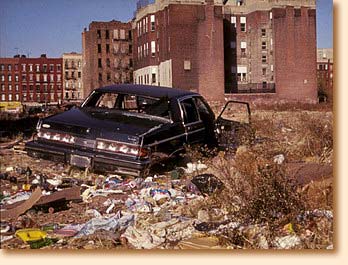
Not post-apocalyptic New York City

Some of this count no doubt comes from the inversion of the "I love New York" merchandise you can find in the Big Apple. And a lot of this hatred probably comes from bad experiences in the city rather than upstate New York. The city has a major cultural scene, it's a huge financial hub, and millions call it their home.

But there's quite a laundry list of reasons people don't like it, too. The pollution, street musicians, beggars, the number of people, the attitude of the people toward non-New Yorkers and other, rent prices and other expenses, crime, and the Yankees.

Not 3. Illinois: 564,000 hits

The reason Illinois has such a big count is this:


Everyone hates Nazis, so I did an advanced search removing them from the equation. Granted, this cuts down on any of the people who are actually complaining about any of the Nazi organizations in Illinois, or any of the whiners who have resorted to Godwin's Law in their issues with the state. But the adjusted result puts Illinois at 140,000 hits, or number 15 on the list of most hated states.

3. Kentucky: 751,000 hits

Even the dogs hate it.

It seems like the Bluegrass State is disproportionately high because of a sports rivalry. The Kentucky Wildcats of the University of Kentucky in Lexington have a major feud with the Louisville Cardinals of the University of Louisville in that city. Both are in Kentucky, which means the residents are quite the self-hating bunch. But it's easier to say "I hate Kentucky" or "Kentucky sucks" if you're a Louisville fan.

There are some complaints about the state rather than the university, though. They're the usual run of gripes: the attitude of the residents, deteriorating infrastructure, road rage, and the people who just plain don't like bluegrass music.

2. North Carolina: 882,000 hits

I would have thought South Carolina would be more hated. Considering the political divide, and the fact that South Carolina has pretty much been the headquarters of conservatism since the Civil War with the latest incident involving a jerkass senator calling both his Republican primary rival and the President "ragheads."

The Daily Show With Jon StewartMon - Thurs 11p / 10c
Thank You, South Carolina - The Race to Replace Disgrace
www.thedailyshow.com
Daily Show Full EpisodesPolitical HumorTea Party


But no, South Carolina garners only 52,900 hits and comes in 31st overall. North Carolina is another self-hating state thanks to sports. The University of North Carolina has a rivalry going with Duke University, and both are in the state but one faction hates Duke while the other hates "North Carolina." It looks like unpredictable weather, the fact that you have to take a side in the basketball war, and drivers make up some of the other issues boosting this count.

1. Nevada: 1,670,000 hits

Really? I never would have expected this. That count is just about a million shy of the population of the state itself. As far as I know, all that's there is Las Vegas, Area 51, and a wide array of nuclear bomb craters. What, are people upset that Nevada gave the presidency to Matt Santos in the fictional election in The West Wing?

Ooh, that durn Mexifornian'll never be MY President!

It seems that relative lack of things to do is what has led people to put Nevada down on the Internet, though. Some commentators say that they despise the state even if they like the people and other aspects of their lives, since it's so hot and dusty and dry. Some of these phrases come from MySpace drama queens who probably hate carrots with as much furor, though. The police make a few appearances as well, and complaints about video games featuring Nevada levels also add to the count.


So what are the least hated locales in the United States?

5. Washington State: 20,700 hits


I expected that Washington might show a false result by the amount of people complaining about the nation's capital. Instead, it came up with this modest figure. I've never been to the state, but it seems like it's got quite a bit of natural beauty in the Cascade Mountains and other areas, plus a terrific city in Seattle.

The complaints that do emerge are the usual fare: drivers and the weather. There are also a few complaints about the state and local government, but doesn't that happen everywhere?

4. New Mexico: 18,600 hits


Awe-inspiring landscapes and UFO crash sites. What's not to love?

Well, the first result is a blogger mildly chastising the state for providing a new home for her best friend, since she wants to be closer to her. And a bit of weather and stuff-to-do complaints show up before Google says the results are pretty much spent.

3. New Hampshire: 17,600 hits

It's always amusing to drive through New Hampshire and see the signs beckoning visitors for cheap booze and cigarettes, plus legal fireworks. It's like all of the fun stuff concentrated in the not-quite-center of New England. The state has a couple of nice little cities, plus the natural splendor of the White Mountains.

One blogger hated it enough to start a seven-part series on his feelings, with the first part looking at winter and black flies. Other complaints generally fall along the same lines before Google runs out of results.

2. North Dakota: 16,200 hits


I'm starting to think North Dakota is something of a national secret. The last I saw, the unemployment rate was next to nothing, and of course you get this rather favorable feedback. It's like a clubhouse that tries to pass itself off as lame to keep outsiders out. Those who do have grievances with the state say there's never-ending winter and nothing to do. I'm sure if they moved to Nevada they'd be fine.

1. Rhode Island: 11,500 hits


Rhode Island is the smallest state, so you really shouldn't pick on it. Plus it's got a nice-looking city and a lot of culture crammed into that modest acreage. Those who don't like it have the same old song and dance: weather, drivers, and stuff to do.


Interested in where your state ranked? Here they are!

Nevada: 1,670,000
North Carolina: 882,000
Kentucky: 751,000
New York: 334,000
Arizona: 281,000
Kansas: 276,000
Alabama: 258,000
Tennessee: 219,000
Indiana: 188,000
Georgia: 176,000
Minnesota: 162,000
Oklahoma: 157,000
Virginia: 156,000
Iowa: 150,000
Illinois: 140,000 (adjusted)
Texas: 133,000
Florida: 130,000
Oregon: 125,000
New Jersey: 116,000
Wisconsin: 109,000
Colorado: 105,000
California: 97,600
Ohio: 97,200
Maryland: 94,600
Missouri: 91,900
Michigan: 86,500
Nebraska: 80,800
Connecticut: 60,500
Louisiana: 53,300
Alaska: 53,000
South Carolina: 52,900
Hawaii: 50,400
Arkansas: 48,600
West Virginia: 44,900
Massachusetts: 44,500
Pennsylvania: 43,300
Idaho: 42,000
Maine: 41,900
Vermont: 39,200
Mississippi: 39,100
Montana: 31,500
Utah: 26,800
South Dakota: 23,300
Delaware: 22,000
Wyoming: 21,600
Washington: 20,700
New Mexico: 18,600
New Hampshire: 17,600
North Dakota: 16,200
Rhode Island: 11,500

Coming eventually: A most/least loved list.

Saturday, May 29, 2010

Internet Killed the Everything Star

Once upon a time, there was a video parody of "Video Killed the Radio Star," the song by The Buggles that was the first music video MTV featured in the wee hours of an August morn in 1981. In that context, The Buggles are kind of assholes, since they're bragging that they're going to kill a particular form of media. Not to worry, radio is still kicking and MTV's quality imploded like a collapsing star after ditching music videos in favor of a hodgepodge of "edgy" shows and dynamiting a number of quality animated series (Clone High and Undergrads among them) to protect the suckiness. And then there was this:


I remember seeing this video back when Shockwave was a cool new Web application offering various animated videos and online games. It apparently hasn't changed too much, but this video is already dated. The Internet services are offered through CD-ROMs? And they include Compuserve? And there's still reason to include a Netscape logo in the mix?

My relationship with the Internet is probably about the same as what I have with gasoline: I realize it has a lot of negative effects, but I friggin' need it. I work at a newspaper, and hear plenty of jokes and dire stories about how the Internet is gleefully killing us and everything else on the planet. At the same time, I spend plenty of time online checking out various websites or Netflix. The resources available online are pretty much the only thing that lets me keep up my other website by doing research in news archives and books whenever I want. And if I, say, wanted to see Summer Glau, let's see how different the paths are between whether I have Internet and whether I don't. Ready? Go!

Internet Me does a quick search on Google Images. And for good measure, I carry it through to this blog with a few keystrokes.

So the Internet has this going for it. Which is nice.

Meanwhile, Non-Internet Me is trying to catch a repeat of The Sarah Connor Chronicles, or seeing if some magazines might have a shot available. Or I could be taking a cross-country road trip to Hollywood complete with hilarious pratfalls to see the lovely Ms. Glau in person...whereupon I would most likely get mace-Tased right away by her personal security or crushed by her powerful robot arms.

So how much harm or good is the Internet causing in various areas? Let's find out together.

The Video Star, ie Music Videos

I'll always have a special liking for the alternative rock songs that appeared in the late 1990s, since that was generally a good time for music and also the time I discovered WEQX. The music videos of the time weren't really special, but I do remember a few of them. They include Oasis playing with a bunch of military helicopters in an industrial ruin, Radiohead's incredibly weird animated video featuring a limbless EU delegate and other such oddities, and the front man of The Verve plowing a straight line walk through a busy London street. Those are all British bands, I realize. So be it.

I've already mentioned how MTV has pretty much ruined itself, so I won't dwell on that. Strangely enough, music videos have grown more popular since people have stopped watching them on television. It makes sense, really. More people use the Internet than watch MTV or VH1, and the bands apparently realize that if something becomes a viral hit they'll receive much more exposure than they might otherwise get. To that end, music videos have become incredibly awesome. They include the Flobots' animated dystopian future, Depeche Mode's short movie featuring a sort of hostage situation with a man in an out-of-control car, and Mutemath lip-syncing their song in reverse to terrific effect. OK Go are the undisputed kings of the new video scene, having put out amazing videos featuring a backyard choreographed dance, a seamless routine on treadmills, and the best Rube Goldberg machine ever made.

So kudos to the Internet on this one. MTV can keep their crummy reality shows if it means music videos are consistently entertaining now.

Record Stores, CDs, and Radio

There are still a few record stores around, and some chains seem to be doing fairly well (see Turn It Up in New England and Cheapo in the Midwest). And I wish them well, because they both have a nice atmosphere and, well, a ton of CDs. Though I have to confess that I haven't bought any discs in quite some time. I don't have an iPod, so it has more to do with listening to the radio and saving any song I really like as a favorite in YouTube. That and the fact that I'm kind of cheap. Illegal song downloads have been around since the Internet was fast enough to sustain them, but it hasn't destroyed the music scene. By having music be available mostly online or through iTunes, though, it seems like CDs and the stores that sell them might be on the way out. Guess it's time to welcome a vacancy in the mall for a little while before letting another Starbucks move in.

Radio, I'm hoping, will endure. It's possible to play tunes off the iPod in vehicles, but it certainly seems unfair to require someone to pour thousands of dollars into a car and then demand that they go out and buy an iPod to fill with their desired songs and podcasts. So cars will always have stereo systems included in them, and hopefully radios will be a part of that. Plenty of radio stations are chock full of good music with minimal commercials and some pretty good DJs to boot. And then there are all of those concert giveaways and tornado warnings that radio brings you.

Guess they don't make a podcast for that.

Movies and Video Stores

One can pick up an illegal movie download as soon as a movie premieres, if not sooner. But that really can't compare to dropping some money every now and then to hit the theater and see something on the big screen. Not everything needs to be blown up to massive proportions with a nice sound system to get the full effect, though, and I do watch online movies on Hulu or Netflix in smaller windows. So any decline in movie revenues can be attributed to people holding onto their cash to put toward more essential needs or people deciding they don't want to see dreck like Furry Vengeance.

Dear fucking Christ

The Internet can't really be blamed for the gradual decline of video stores, either. The very fact that they're still called video stores when VHS has pretty much disappeared from the market isn't a good sign. And ironically enough, the true threat to them is Netflix and other mail-in services, which utilize the post office, which the Internet also threatens to some degree. It's much easier to have a DVD mailed directly to your house, or stream it online, than make a trip to a video store and face late fees. Though if the Internet kills the post office, you can never get movies ever again. Except bootlegs or a more extensive online stream network, which can be ported directly to your television. Dammit.

Television

It's pretty much the same thing as movies. It's not like commercials weren't already interludes that let you get a snack or take a bathroom break, but TiVo has taken things to the logical conclusion by letting you skip them altogether. Hulu and other streaming sites offer pretty much the same perk: wait a day, miss the water cooler talk, and watch your show with only a scattering of 30-second ads. Of course, these ads can repeat themselves ad nauseum.

Overall verdict: television has had a few golden ages, and though it seems to have progressed from a "stupid reality shows" phase to an "endless cop shows" phase, there are plenty of terrific dramas and comedies out there and the Internet is probably helping them more than hurting them. It was pretty much the entire reason for the writer's strike back in 2007-2008, after all. All told, the Internet is much less threatening to television than the team that makes creative decisions at Fox.

Canceling this, and Arrested Development, and Greg the Bunny, and so on = Rupert Murdoch is going to the special hell

Video Games

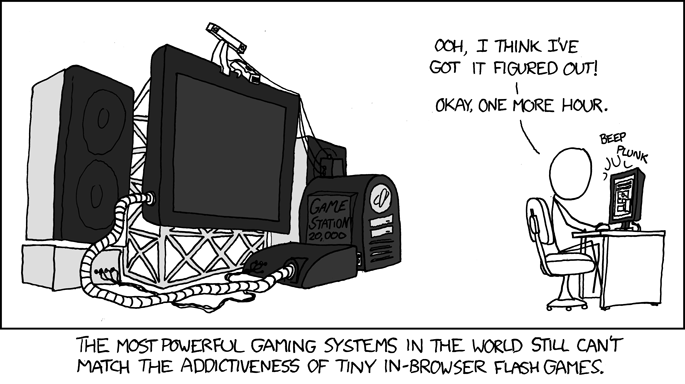
Online games are about as graphically advanced as the old Playstation games. The real issue lies in their addictiveness. XKCD already said it very well:


Newspapers and Journalism

So here's my plan: I'm going to bury my head in the sand and ignore any and all bad news I hear related to newspapers.

A terrible strategy, I know, but I'm currently stuck in a situation which is neither dire nor ideal and I'm sure that's how the newspaper industry can be described as a whole. For all the jokes about every newspaper and magazine in the country fading into nothingness in a matter of months, they are still looked upon as a trusted source of local news (and national news, though there are plenty of people who criticize those as "liberal media" while implicitly trusting anything on Fox News). A newspaper subscription is cheaper than an Internet package, but of course a newspaper doesn't come with access to anything and everything ever produced. And those of us who grew up reading the funnies have realized that most of the comics now are bloated relics kept trundling along by an original artist's offspring while the stuff that makes you laugh has migrated online, where amusing people with some degree of artistic skill can reach a wider audience.

So newspapers are in trouble. They apparently can't afford to keep teams like Woodward and Bernstein focused on important stories, and the people who get fired are more likely to be the experienced reporters at a higher pay grade than the cubs who aren't paid much. At the same time, there's always a demand for news, and there seems to be a corresponding demand for accountability. Newspapers might convert into an online product or something like the version of the Minority Report version of the USA Today that morphs to incorporate breaking news, but it seems like there will always be a place for journalism. As long as journalism in general doesn't go off the rails into completely editorial territory.

If that thing leaves the island, that's it. It's over. Everything.

The post office

Which is easier: typing dozens of words per minute in an "electronic mail" that can be quickly and instantly sent to someone, or carefully scrawling out a letter and envelope, spending forty-some-odd cents to send it on its way, and getting it to the mailbox or post office where it will proceed to a destination within a few days.

For idle conversation and other routine correspondence, e-mail is ridiculously convenient. And with companies everywhere urging people to go paperless, will there come a time when the mail system simply collapses for lack of anything to distribute other than glossy junk mail? Well, hopefully not. Sending out cards for someone's birthday or other special events should be firmly in place. I don't think sympathy e-cards where a cartoon duck consoles you the loss of a loved one will catch on. And then there's always Netflix. Sweet savior of the postal system, Netflix!

Books and bookstores

And perhaps Giles on Buffy the Vampire Slayer said it best for this one: "Smell is the most powerful trigger to the memory there is. A certain flower, or a-a whiff of smoke can bring up experiences long forgotten. Books smell musty and-and-and rich. The knowledge gained from a computer is a - it, uh, it has no-no texture, no-no context. It's-it's there and then it's gone. If it's to last, then-then the getting of knowledge should be, uh, tangible, it should be, um, smelly."

Apparently books are doing fine, even if they're being printed on paper and that's dying out and allowing trees to grow back and cure the planet of all its ills. Granted, most paperbacks published in North America are romance novels. Tell me, does the strapping guy with the pecs the size of Ohio get the fair maiden? Spare me the suspense! Still, there's something about relaxing in bed or a favorite chair with a good book. We're not at the point where everything had to be on the screen, are we?

Compact discs? How primitive the Martian libraries of the year 3000 are.

Language and grammar

Perhaps the biggest drawback of the Internet is that some idle browsing can inculcate the idea that the human race has gotten stupider since we can hide behind a pseudonym and post messages that look like the ramblings of a drunken 10-year-old. Some people probably post these things to be ironic, but, as Jon Stewart would say, YOU'RE NOT HELPING. Text messages have certainly helped in diluting words to as few letters as can be managed, and then of course Twitter came along. Have a thought? Please be sure to condense it into 140 characters or less, and use the number sign to join thousands of other people in commenting on some current event, or the @ symbol to try to get the attention of celebrities. Oh, if only William Faulkner were alive to take part in it!

I probably shouldn't be so crotchety. For the most part, the Internet is well-versed and coherent, with scholarly articles and widespread collections and a plethora of random sites like this one with the occasional (hopefully forgivable) lapses in spelling or grammar. Still, I'm unclear how a funny cat video can devolve into a debate over whether or not America sucks. And though hilarious, there's always PeopleofWalMart.com and Lamebook (aka, "White Trash Gets A Facebook Account) to make us question the human race.

But I guess I can't really take too intellectual of a stance here considering the section I'm going out on.

Porn

"So you're looking for pornography, are you?" asks the kind Internet Merchant. "Well, I guess I can help you out. I've got a couple of billion images if you care to browse. About the same number of videos, too. It's all free, of course. And you can surf it all from the privacy of your own home instead of going into some sketchy shop or trying to buy a dirty magazine from some store clerk while waiting in line right in front of a Catholic grandmother getting Flintstones tablets for her three grandchildren. Is that all right with you?"

He's quite nice, this Internet Merchant.

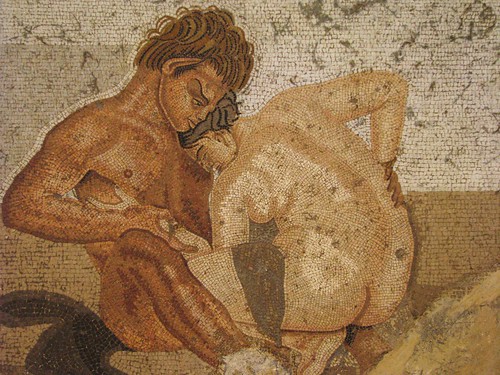
You know what? Porn is like the cockroaches after a nuclear blast. It'll always be around, because it's a constantly changing thing. If the Romans took the time to make pornographic pictures out of hundreds of pieces of colored tile, I imagine pornography will always be riding in the wave of new technology like a top-notch surfer. Perhaps newspapers could learn a thing or two from it.

I'll be in my bunk.

Saturday, May 8, 2010

I Make Fun of State Quarters: Bears Took Over Alaska

By one depiction, Alaska is a black hole of civilization (even if there's a few months where the sun never goes down, but then again light gets sucked into a black hole). By this logic, those guys who came up with the term "Seward's Folly" to describe the decision of Lincoln's Secretary of State to by an enormous chunk of land from Russia on the cheap were right. Not so much because they thought it would be a "hostage territory" vulnerable to foreign invasion (though the Japanese still fought pretty damn hard for a few fragments of the Aleutians during World War II) but because $7.2 million seemed like a lot of money for a desolate swath of tundra and ice. So from the scattered reports that have escaped from the wasteland, it appears Alaska is critically short on women, locked in a losing war with the fearsome moose, packed with kooky politicians who think the Internet is made of tubes and Democrats are embarking on a mission of pulling the plug on old people, and uncomfortably mixing a reliance on alcohol with the greatest ratio of pilot's licenses in the nation.

The other interpretation is that Alaska is a terrific place with some of the best natural beauty in the country. Seward's purchase gave the nation a new tallest mountain, as well as a plethora of amazing forests and rivers and wildlife. And residents came up with the crazy-but-fun-sounding ideas of an epic sled dog race and a bloodying scramble up the shale-littered slope of a mountain. Not to mention all that oil and timber that comes out of the deal.

So grinding all of those traits in a blender yields this:


"And the number one threat to America..."

Alaska was one of the last states to enter the Union and, correspondingly, one of the last states to get a quarter in the program. Designed by Charles Vickers and released on August 23, 2008, the quarter quite simply depicts a huge friggin' grizzly bear snagging a salmon from an isolated river. The only other features to point out are the inscription "The Great Land" (referencing the fact that Alaska could crush much of the continental U.S. if dropped on it) and the North Star, hidden off to the side of "1959" and likely a reference to the magnetic colorstorms that are nicely visible in the state.

There might be some hidden references to other aspects of Alaskan life here, such as the hint of a tree on the shore referencing forestry and/or the natural beauty of the state. And the fact that bears have either massacred all of the residents and taken over the state, or at least ousted all human fishermen and monopolized the salmon market.


They took our jobs! But they're so cute...

It's a little tough to take on the Alaska state quarter. While searching around, I discovered that the crew over at Rifftrax deemed it the most awesome state quarter of the whole bunch. This duo made up the meat of Mystery Science Theater 3000, and in their final showdown they gave Alaska the coveted title over Wisconsin, despite their strong ties to the state from childhood and university studies. It would be a little difficult to match these wits in a battle to mock state quarters, so I'll just sum up that they felt the Alaska quarter was legitimately awesome while the cheese and cow of the Wisconsin quarter were only awesome in an ironic way.

And then there's this:

Governor Palin unveils Alaska's two-bit competitor of the AK-47

With the release of quarters once again corresponding to important events, the Alaska quarter went into circulation only six days before John McCain announced that Sarah Palin would be his running mate in the 2008 presidential election. And if you didn't like the bear design, you can at least be glad that the schedule wasn't tweaked to have the quarter released a year later. If that was the case, the GOP probably would have clamored to have Palin smiling beneath the banner reading, "You betcha!"

Monday, April 26, 2010

Nostalgia in the Trash

Like most people, I'd guess, my outlook on the day seems to improve as the week goes on. I've had Mondays where I look on the morning as the last bastion of the weekend and try to enjoy eating breakfast and reading the paper as much as possible before another five days of work get underway. And then Tuesday seems a little better (especially when it's capped by either a gaming session with friends or, failing that, an episode of Lost). And Wednesday is OK, and Thursday is pretty decent, and who the hell doesn't love a Friday?

But Monday mornings can be a little dreary, and so that might have been why I was hit with a bit of sadness when I looked in my trash this morning and saw this:

Oh expired Burger King coupon book, I hardly knew ye.

Well, that's almost what I saw...the yogurt cup is from lunch and would be in my recycling bin if the transfer station bothered to take more plastics. And I don't really care about the wrapping from a roll of Hannaford-brand paper towels or the butter-encrusted bag of Jolly Time from the weekend's Netflix fest. So that leaves that SuperAmerica Speedy Rewards membership card right there on top.

It was both a lazy and productive weekend, and yesterday I opted to do some overdue cleaning. When I went through my desk drawers, I found a few things that could be tossed out. One was a little plastic SA Speedy Rewards oval, which is designed to fit on a key chain and be easily swiped under a scanner. The program designates point values to certain items in the SA convenience stores, and you can trade them in for rewards such as free drinks or gas discounts. SuperAmerica is a strictly Midwestern affair, and on my last trip to Minnesota I discovered that the points I had accumulated during my college years had expired. So, since my Minnesota trips are few and far between now, I tossed the oval and figured I might as well get rid of the SA card in my wallet while I was at it.

I didn't think anything of it at the time, but saw it in something of a different light this morning. Sure, it's just your standard rewards program card, but it has a bit of nostalgic value related to my time at Macalester College. I got it in my senior year, when I was living in a house on campus and buying gallons of milk on a regular basis. They were a bonus item at that point, worth 200 points apiece, and so I easily earned a couple of treats before milk went out of the rotation. The card also proved its worth on a couple of outings with friends, including a Blockbuster mission with the goal of getting one good movie and one terrible one; donuts were the bonus item then, and proved too good to pass up.

We're walking in the air...We're floating in the moonlit sky...

So basically I saw a bit of my college days lying in the garbage. And it triggered some nostalgia for them, now just about four years gone, and is there any better way to start a Monday morning than with an emotion my somehow surviving Webster's dictionary defines as "a yearning to return to the past"? I had plenty to keep me occupied during the day, but it made me want to write up the incident anyway.

The card is still lying there in the trash can. I have a touch of hoarding instinct; the housecleaning that claimed the SA relics spared a bunch of old National Geographic maps, even though I don't have much use for them. Usually I'll reassess something every time I see it, and eventually it might end up getting consigned to the junk heap or a thrift store. The card may have a couple of small memories attached to it, but it's nothing that isn't stored in my head anyway. And I can't get all emotional over rubbish, after all.

"That fast food bag reminded me of my first date..."

Sunday, April 18, 2010

Greatest Thing of Anything: Robot Hall of Fame

Some time ago, I suggested that all human political frustrations could be solved by the creation of a bipartisan, singularity-driven robot government. Carnegie Mellon University is not quite ready to go that far, but they have certainly taken a step toward honoring our once and future benefactors. In an effort to honor "the fictional and real robots that have inspired and made breakthrough accomplishments in robotics" and "call attention to the increasing contributions from robots to human society," the university created the Robot Hall of Fame.

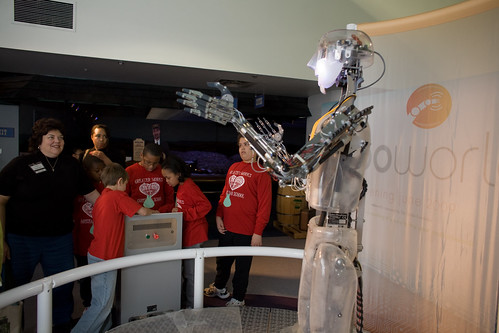
Carnegie Mellon teaches about robots; children hit random buttons and pretend to learn something.

I have not visited the Pittsburgh university, but the Robot Hall of Fame appears to be part of a growing focus on robotics at their Science Center. Just about this time last year, it was announced that "roboworld" would provide a permanent educational display about artificial intelligence and other such lovable automatons. As far as I can tell, the Robot Hall of Fame is nestled among these displays.

Since it was founded in 2003, the hall has inducted 26 robots, with eight arriving in last year's picks. Because scientists want to have fun too, the jury for choosing the inductees is made up of an international hodgepodge, with members ranging from late sci-fi writer Arthur C. Clarke to Steve "The Woz" Wozniak, a lowly co-founder of Apple. And these are serious deliberations, too, with jury teleconferences to discuss the relative merits of each nominee. You didn't hear this from me, but apparently Dr. Ruzena Bajcsy, a Berkeley electrical engineering and computer science professor, once exchanged blows with Anthony Daniels, the actor who played C-3PO, over the question of whether or not Agent Smith from the Matrix movies constitutes a robot.

Agent Smith grimaces upon learning that he was barred from consideration in the 2008 induction for stuffing the ballot box.

As it stands right now, the count is tied at 13 each for fictional and non-fictional robots. Of course, when you put them side by side, the non-fictional bots leave something to be desired.

Non-Fiction

  • Three Mars rovers (Pathfinder, Spirit, and Opportunity)
  • Two robotic manufacturing arms (Unimate and SCARA)
  • A medical system (DaVinci Medical Robot System)
  • A shuffling, faceless humanoid (ASIMO)
  • A robot named after its jerky motions rather than its groundbreaking ability to reason (Shakey)
  • Another bot with an unflattering nickname and a groundbreaker in the development of mobility (Railbert Hopper)
  • A self-steering minivan (NavLab 5)
  • A plastic puppy (AIBO)
  • A vacuum cleaner (Roomba)
  • A Lego toy line (Mindstorms)

Fiction

  • Three service drones assisting a rogue botanist in his attempt to save Earth's surviving forests (Huey, Dewey, and Louie)
  • Two droids who helped defeat a galactic Empire (R2-D2 and C-3PO)
  • An android and chief operations officer on board a starship (Lt. Commander Data)
  • A killer cybernetic abomination turned super-strong cybernetic bodyguard (T-800 Terminator)
  • A killer AI spaceship system (Hal-9000)
  • A hulking, shiny warning against nuclear war (Gort)
  • A metallic bourgeois doppelganger (Maria, of Metropolis)
  • A synthetic replacement child (David, of A.I.)
  • Another child-bot, with superpowers! (Astro Boy)
  • A bulky automaton who, if pop culture is to be believed, does nothing but shout that danger is about (Robby the Robot)

OK, so maybe scientists have some of those fictional creations beat, but for the most part they're getting outclassed. At least the non-fictional choices carry more weight, given the fact that they actually exist. Shakey, for example, looks like your standard ugly-but-functional creation but had rudimentary language capabilities and was able to figure out how to meet simple given instructions on its own. The Spirit and Opportunity rovers, meanwhile, are on another planet. And they're still working to gather information from Mars, even if they're almost as old as the Robot Hall of Fame itself. The fictional bots, meanwhile, are honored more for their place in introducing the robotic concept into popular culture. Though given the induction of the T-800 and HAL-9000, they're already dipping into the homicidal robot category just a bit; both of these creations started off as bad guys, then returned as protagonists in the sequel.

Spoiled a perfectly good ceremony by saying who all the inductees would be through 2029.

Carnegie Mellon has been a little lax in updating the hall's website, so the last detailed update only discusses the 2008 bots. Meanwhile, the nomination process allowed on the sites shows both the wide range of pop culture AI out there and puny human intelligence, dropping towards a point where ASIMO will be able to beat us by his ability to maneuver stairs. For example, Lieutenant Commander Data of the starship Enterprise has garnered a two percent favorable rating (the sixth highest of the list) from users despite the fact that he was added to the Hall of Fame two years ago; other nominations show numerous repeats or requests for bots already honored. The top contenders among the public are currently the cannon-wielding video game character Mega Man (who I always thought was more of a cyborg) and surly 30th century suicide booth manufacturer Bender Bending Rodriguez of Futurama.

I'm all for robots having their own hall of fame, and I think this will have a rather nice unintended side effect. There are a staggering number of fictional bots out there. Futurama alone can probably contribute dozens, ranging from soap opera actor Calculon to the Robot Devil. Then there's Dog of Half-Life 2, a scrap heap creation who can take on whatever the alien conquerors of Earth can throw at him; Wall-E, the souped up Roomba and savior of fatass future humanity; Rosie, the Jetsons' maid...the list goes on. If Carnegie Mellon doesn't want to start introducing nothing but fictional bots, then the techies are going to have to get cracking on those new designs.

Oh, and yeah...they should add Summer Glau. Obviously.

Breakthrough accomplishment: first robot to eat food. And still look good like this.

Saturday, April 10, 2010

I Make Fun of State Quarters: Alabama Loves Socialists

From what I can gather, the state quarters program which began in 1999 and dragged on for another decade. Meaning if you didn't care much for the Bush Administration, you could at least console yourself with the periodic introduction of a shiny new 25-cent piece showing some idyllic depiction of what the state is best known for. Everyone thought these were quite nice, and it was a successful enough initiative of the Mint that they'll be rolling out another set of quarters featuring Guam and Puerto Rico and other such U.S. protectorates.

I don't have any real gripes with the state quarters, but I figure this will be a fun enough 50-part series to do, with the possibility for expansion to the protectorates later on. And it just so happens that the quarter design that inspired this idea is the first, alphabetically anyway, of the states.

ALABAMA

Helen Keller sits around and takes credit for Louis Braille's work.

This quarter was released on March 17 of 2003, all of two days before the U.S. invasion of Iraq. Designed by Norman E. Nemeth, the coin features Ms. Keller flanked by the magnolia-laden branches of an Alabama long leaf pine. The centerpiece, of course, is Hellen Keller and the little Braille nod in her direction. Everyone knows who Keller is. What she did is less certain. She was blind, deaf, and dumb, meaning she lived a rather scary-sounding existence based on smell and touch until she gained the ability to speak. And then...the miracle worker told her what water was? I'm not sure. Well she must have been from Alabama, anyway.

All right, here's what the wonderful Wikipedia factory has to say. Keller was born in 1880, lost the ability to see and hear due to an illness at age one-and-a-half, and was just starting to communicate when that happened...and learning to speak is kind of hard when you can't see or hear anyone. Her family wanted to give her a fighting shot at education, and with the help of her teacher, Anne Sullivan, Keller went on to learn how to speak and alternated between schools for the blind and deaf. Then she went on to graduate from Radcliffe College in 1904, becoming the first deaf-blind person to get a Bachelor of Arts degree.

So there you have it. An inspiring story of family love and an inspiring teacher and a young woman overcoming the odds. She's certainly a good person to put on the quarter, and probably one of the better choices since the list of notable Alabamans seems to mostly feature sports stars. Rosa Parks would have been another good choice, but she was still alive when Alabama's turn came up and the Mint seems to have a practice of not putting living people on money. Though that didn't stop the more devoted Reagan lovers from demanding that the then-aging ex-President take FDR's place on the dime, since the bullet that hit Reagan during his assassination attempt was dime-shaped and all that crummy Roosevelt did was start the March of Dimes.


The designer of this Reagan was next seen making a fevered dash for Devil's Tower.

But I digress, and the Reagan currency debate can be on admittedly more solid ground now that he's passed away. Though from what I hear, some congressmen probably won't stop until he's on every piece of currency. Ever. IN THE WORLD.

So what did Ms. Keller go on to, then? Well, she got married a year after graduating college, wrote 12 books, got a dog in Japan named Kamikaze-go, received the Presidential Medal of Freedom, co-founded an institution in her name, helped start the ACLU, joined the Socialist Party-

A-whaaaaaat?
Yes, Helen Keller joined the Socialist Party as well as the International Workers of the World, spoke on the topic of workers' rights quite a bit, and campaigned for Socialist presidential candidate Eugene V. Debs. This was during that period in U.S. history when the Socialists actually had some clout, but still weren't received all that well. Keller said people who had once paid her compliments now played up her disabilities. In one amusing case, she responded to a newspaper that claimed the Socialists had used her disabilities to trick her into supporting their cause by saying, "There's a chance for satirical comment on the phrase, 'the exploitation of poor Helen Keller.' But I will refrain, simply saying that I do not like the hypocritical sympathy of such a paper as the Common Cause, but I am glad if it knows what the word 'exploitation' means."

"Shut up, Helen, there's teabaggers about!"

To wrap up the Helen Keller story: well, she died. In 1968, in Connecticut. She spent a lot of time raising funds for the American Foundation for the Blind, and was made the subject of several plays and movies. Which, of course, focused mainly on how she learned about water from Anne Sullivan rather than her Socialist and pacifist tendencies.

So it seems this has turned into more of a look into Helen Keller's life than a major critique of the Alabama state quarter. I guess I'll close by saying this: Alabama, those tree branches are quite lovely, and you have a Socialist on your quarter. Which is fine, it's a free country and all. But the next time I see a Tea Party rally down that way, they'd better be demanding a redesign to put Rosa Parks on the coin or else their complaints about socialism are going to ring kind of hollow.

Sunday, March 28, 2010

Crossover I Want To See: Frisky Dingo vs. Half-Life 2

The Participants

"Mmm, whose saddle is this? That's Uncle Taint's!"

Frisky Dingo
: A short-lived Adult Swim series created by the guys who made Sealab 2021 and more recently made Archer for FX. Only two seasons aired, featuring posh pseudo-villain Killface and billionaire playboy/idiot/superhero Xander Crews as the main characters. Killface spends the first season unsuccessfully trying to alert the world to the fact that he possesses a doomsday device, and the second season running for President of the United States after said device inadvertently solves the problem of global warming. Along the way, we become acquainted with a gang of imbecilic robot-armored soldiers and the harrumphing clones of an old man, among others.

Badasses with crowbars will always triumph over alien oppression.

Half-Life 2: A very successful sequel to the somewhat lo-fi but still very enjoyable computer game Half-Life, the series picks up to find Gordon Freeman in a world conquered by alien life forms and totalitarian occupiers, as the planet has been conquered by the entities released during a lab catastrophe in the first game. Awakened from stasis by the mysterious "G-Man," Freeman joins a resistance movement to fight back against the sinister Combine forces. Along the way, he takes down tripod war machines, head-humping alien crabs, zombified humans, and an entire friggin' city.

The Crossover Point

Robert Guillaume

Meet Robert Guillaume. He's earned his acting chops (and a couple of Emmy Awards) from work on the series Benson, as well as another series entitled Soap. He even had his own show for a short time in 1989, before making a more smashing return to the public sphere by voicing Rafiki in The Lion King. He picked up a few other voice credits after that film, after no doubt realizing that his voice is enviable and awesome.

One of the gigs Guillaume picked up was for Dr. Eli Vance, a key character in Half-Life 2. Vance is an essential part of the human resistance, and appears in the game at various safehouses and other locations that Gordon Freeman happens upon in his swath of destruction through extraterrestrial fauna and other baddies. A scientist and former co-worker of Freeman's, Vance is one of the warmest in a set of genuinely likable characters. He maintains an upbeat attitude; shows a strong compassion for Freeman and his daughter, and gets in a few jokes about the romantic tension which seems to exist between the two; and, fictionally at least, is responsible for the wonder that is the Zero Point Energy Field Manipulator, or Gravity Gun.


I'm unfamiliar with Guillaume's earlier stuff, but in his voice work he seems to focus on playing the good guy. His characters have the feel of ultra-cool grandparents. Rafiki and Eli Vance have a lot of similarities, even if the former is in a dark yet still G-rated children's movie and the latter shows up in a mature-rated video game with plenty of blood spatter.

And then there's Mr. Ford.


Pretty much every person in Frisky Dingo is seriously lacking in morals, but the show's creators somehow got Guillaume to voice one of their more churlish and profane characters. Which isn't to say that Mr. Ford isn't downright hilarious. It's just that he isn't above providing security at illegal "death rabbit" matches in Chinatown or poisoning his way to the Presidency.

For whatever reason, Guillaume is not credited for the role. Google searches combining his name with Mr. Ford or Frisky Dingo, or either term with Eli Vance, come up with nothing. Perhaps Guillaume wants to keep the credits for his voice work limited to virtuous roles, but there's no reason someone can't have a little fun creating a mashup of Frisky Dingo and Half-Life 2.

How It Would Be Done

Simple: Mr. Ford's dialogue in place of Eli Vance's for various scenes in the game.

And it could probably work for The Lion King, too...